Ukraine’s NATO Gambit: A Diplomatic Pivot and Its Shockwaves Through Global Markets
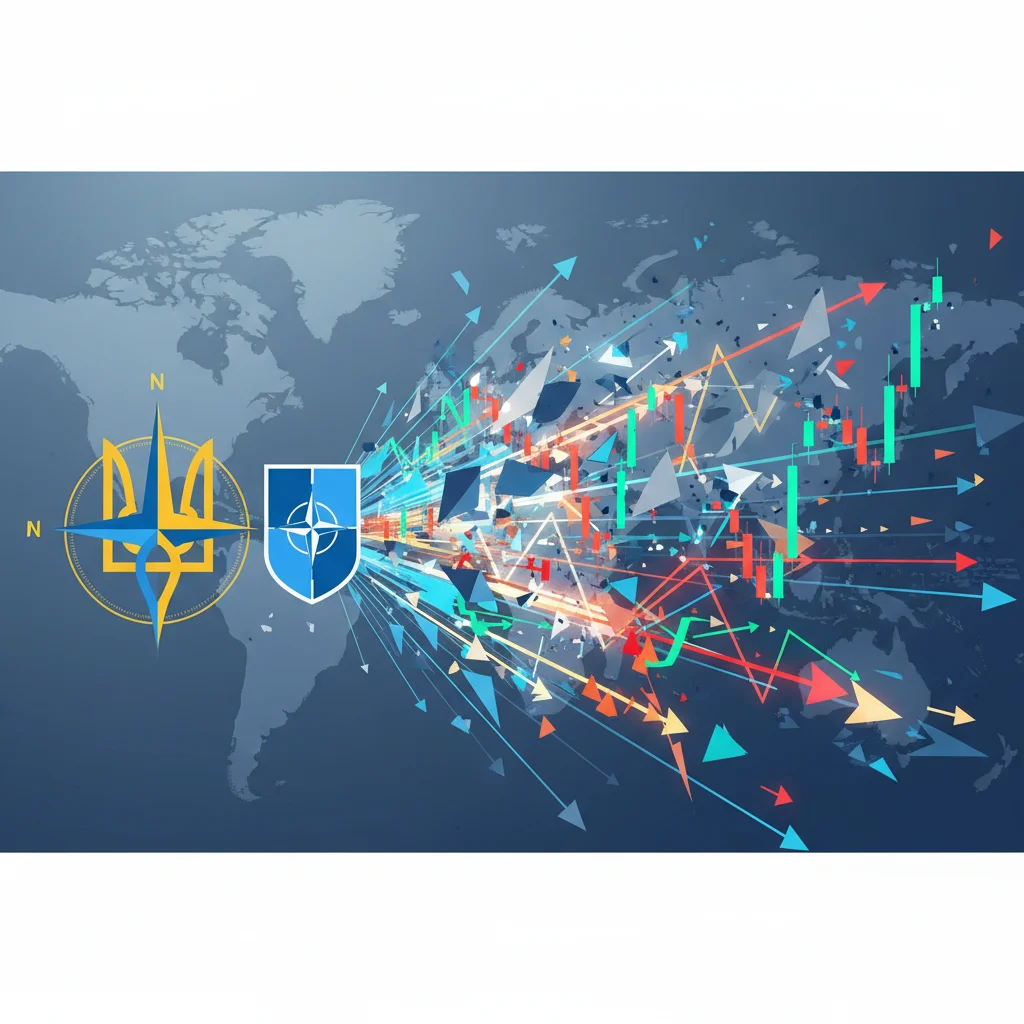
In the high-stakes world of international diplomacy, a single statement can recalibrate global power dynamics and send tremors through financial markets. We’ve just witnessed such a moment. In a significant strategic shift, Ukrainian President Volodymyr Zelenskyy has indicated that Kyiv may be willing to drop its long-held demand for NATO membership, a cornerstone of its foreign policy for over a decade. Instead, he is focusing on securing direct protection guarantees from the US and key European allies ahead of crucial talks in Berlin. This move, reported by the Financial Times, is far more than a diplomatic concession; it’s a calculated gambit that carries profound implications for the global economy, investment strategies, and the future architecture of European security.
For business leaders, investors, and finance professionals, understanding the nuances of this development is critical. It’s not just about troop movements and treaties; it’s about risk assessment, market sentiment, and the flow of capital across a world grappling with uncertainty. This pivot could signal a potential pathway toward de-escalation, or it could be a strategic maneuver in a protracted conflict. Either way, the economic and financial aftershocks are already being priced in.
The Geopolitical Chessboard: Why This Move Matters
To grasp the magnitude of this statement, one must understand the historical context. Ukraine’s ambition to join the North Atlantic Treaty Organization (NATO) has been a central point of contention with Russia for years, cited by Moscow as a primary justification for its full-scale invasion. NATO’s “open door” policy, in principle, allows any European nation that can contribute to the security of the North Atlantic area to apply for membership. However, the reality is a complex political process requiring unanimous consent from all existing members.
By publicly floating the idea of forgoing this ambition in exchange for concrete, legally-binding security guarantees from individual Western powers, President Zelenskyy is fundamentally altering the negotiation landscape. This is not a surrender, but a pragmatic pivot. It addresses one of Russia’s key stated security concerns head-on, potentially opening a narrow diplomatic window. At the same time, it places the onus squarely on the US, UK, Germany, and France to define what a non-NATO security framework for Ukraine would look like. Would it be a series of bilateral treaties? A new multilateral pact? The answers to these questions will dictate the stability of Eastern Europe for decades to come.
From Geopolitics to Global Economics: The Ripple Effect
International conflicts are powerful catalysts for economic change, and this war has been no exception. It has reshaped energy flows, scrambled supply chains, and fueled global inflation. Therefore, any significant shift in the conflict’s trajectory has direct consequences for the global economy and, by extension, the stock market.
A potential de-escalation resulting from this diplomatic shift could have several immediate economic impacts:
- Energy Markets: Europe’s frantic race to wean itself off Russian gas has caused unprecedented price volatility. A credible path to peace could stabilize natural gas and oil prices, easing inflationary pressures on consumers and businesses worldwide. However, the structural shift away from Russian energy is likely permanent, creating long-term opportunities in LNG infrastructure and renewable energy sectors.
- Supply Chains: The conflict disrupted the global supply of essential goods, from Ukrainian grain and sunflower oil to Russian fertilizers and industrial metals. A cessation of hostilities would restore these critical trade routes, helping to lower food prices and ease manufacturing bottlenecks. According to the World Bank, the war has had a devastating impact on food security, and a resolution is key to mitigating a global crisis.
- The Economics of Reconstruction: The cost of rebuilding Ukraine is staggering, with estimates running into the hundreds of billions of dollars. This monumental task will require a global effort, financed by a combination of seized Russian assets, international aid, and private investment. This represents a multi-decade opportunity for companies in construction, engineering, infrastructure, and, crucially, financial technology.
The role of modern banking and finance in this reconstruction cannot be overstated. It will be a testing ground for new models of public-private partnerships and innovative financing mechanisms designed to mobilize capital on a massive scale.
Europe's Trillion-Dollar Magnet: Why Global Investors Are Betting Big on the Continent
An Investor’s Roadmap: Navigating Market Volatility and Opportunity
For those engaged in trading and investing, geopolitical shifts are a primary source of volatility. This development is no different. A nuanced approach is required, moving beyond knee-jerk reactions to analyze the potential impact on specific sectors and asset classes.
Below is a table outlining potential scenarios and their implications for investors, providing a framework for strategic decision-making in the current environment.
| Scenario | Potential Market Impact | Key Sectors to Watch | Associated Risk Level |
|---|---|---|---|
| Best Case: Robust Security Guarantees & Ceasefire | Strong “risk-on” sentiment. European equities rally. Reduced energy price volatility. Easing inflation. | Infrastructure, Construction, Consumer Discretionary, Banking, Fintech (for reconstruction). | Low-to-Medium |
| Base Case: Protracted Negotiations & “Frozen Conflict” | Continued market uncertainty. Range-bound trading in major indices. Persistent risk premium on European assets. | Defense, Aerospace, Cybersecurity, Energy (LNG & Renewables). | Medium-to-High |
| Worst Case: Failed Negotiations & Renewed Escalation | Significant “risk-off” event. Flight to safety (USD, Gold). Sharp drop in equities. Spike in energy and commodity prices. | Defense, Precious Metals, Energy Producers (non-Russian), Managed Futures. | High |
The reaction of the defense industry is a particularly interesting barometer. While a lasting peace would theoretically reduce demand for weaponry, the reality is that this conflict has triggered a paradigm shift in European defense policy. Nations are now committed to significantly increasing their military spending for years to come, a trend that is unlikely to reverse regardless of the outcome in Ukraine, a fact supported by analysis from institutions like IISS. This suggests a sustained tailwind for the defense and aerospace sectors.
Unintended Alliances: How US Tariffs are Forging a New Economic Bloc in Asia
The Fintech and Blockchain Frontier in Post-Conflict Recovery
Looking beyond the immediate market reactions, the eventual reconstruction of Ukraine presents a unique opportunity to leapfrog traditional systems and build a truly 21st-century economy. This is where financial technology, or fintech, will play a pivotal role.
Imagine the challenge: distributing billions of dollars in international aid and investment with full transparency and efficiency. This is a perfect use case for innovative financial solutions:
- Blockchain for Transparency: Distributed ledger technology could be used to create a transparent, immutable record of how reconstruction funds are allocated and spent. This would dramatically reduce the risk of corruption and increase donor confidence, attracting more private capital.
– Digital Banking and Payments: A rebuilt Ukraine could bypass legacy banking infrastructure and build a digital-first financial system, promoting financial inclusion and streamlining commerce. The resilience of Ukraine’s digital banking sector during the war has already been remarkable.
– Fintech for Capital Formation: Crowdfunding platforms and other fintech solutions could be used to mobilize investment from both large institutions and the global diaspora, allowing for targeted funding of specific projects, from rebuilding a school to capitalizing a new tech startup.
The post-conflict era could see Ukraine emerge as a major European hub for fintech and blockchain innovation, born out of the necessity of rebuilding a nation with modern tools. For investors with a long-term horizon, the nascent Ukrainian tech sector could offer compelling growth opportunities.
Conclusion: A New Chapter of Uncertainty and Opportunity
President Zelenskyy’s offer to reconsider NATO membership in favor of direct security guarantees is a landmark moment in the ongoing conflict. It is a complex diplomatic maneuver that injects a new dynamic into the search for peace. For the global community, and especially for those in finance and business, this is a signal to pay close attention. The path from this statement to a lasting resolution is fraught with challenges, and the implications for the global economy and stock market will unfold in real-time.
This development is a powerful reminder that geopolitics and economics are inextricably linked. While the human cost of the conflict remains the paramount concern, the strategic decisions made in Kyiv, Moscow, Berlin, and Washington will define the investment landscape for years to come. The key to navigating this new chapter is not to predict the future, but to understand the range of potential outcomes and position portfolios to be resilient in the face of both risk and the profound opportunities that emerge from moments of historic change.