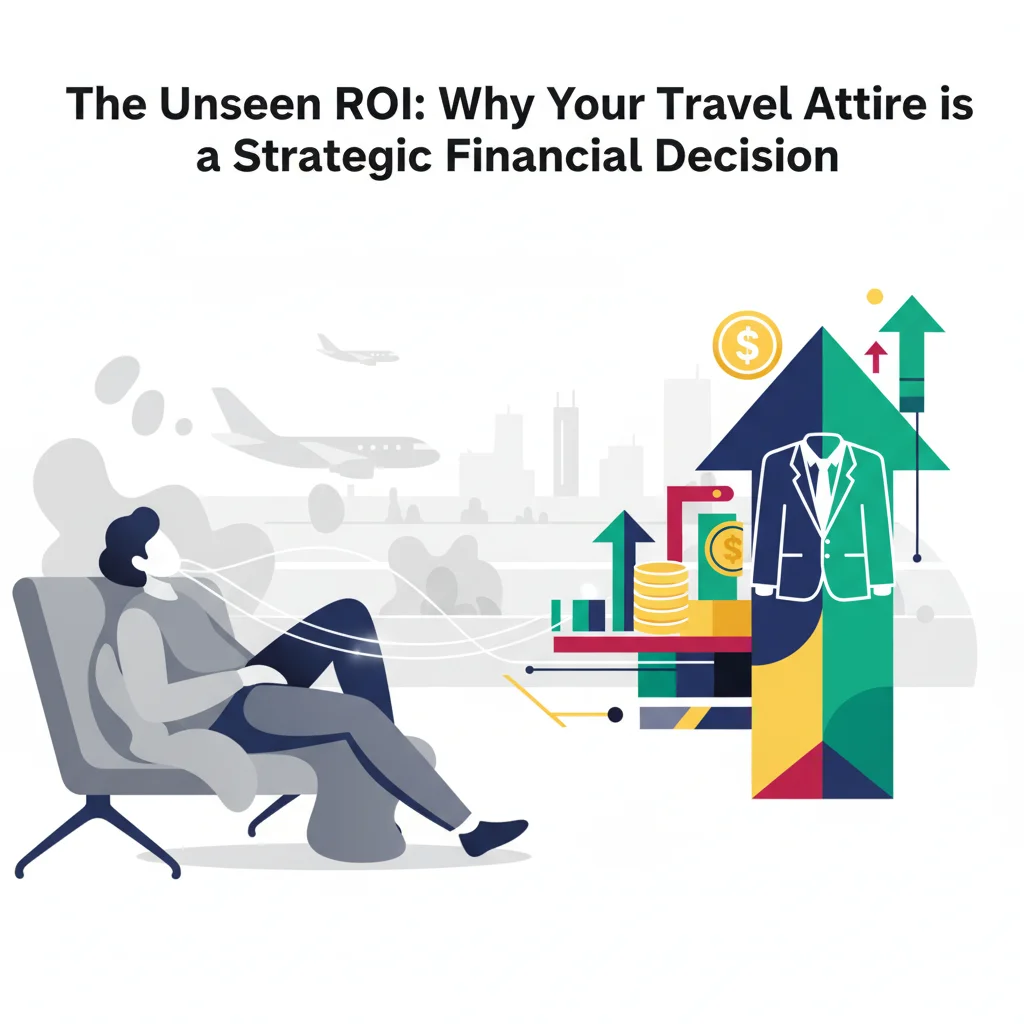
The Unseen ROI: Why Your Travel Attire is a Strategic Financial Decision
The modern airport departure lounge often resembles a vast, chaotic living room. Passengers clad in sweatpants, hoodies, and even pajamas shuffle towards their gates, prioritizing comfort above all else. This casualization of air travel is a relatively recent phenomenon, a stark departure from the era when flying was a formal occasion. While the US transport secretary may be on a campaign to civilise air travel, the argument for dressing smartly when you fly runs far deeper than simple etiquette. For professionals in finance, business, and investing, what you wear in transit is not a trivial matter—it’s a strategic decision with tangible and intangible returns.
It’s a form of non-verbal communication, a subtle signal that can influence perceptions, open doors, and even impact your own psychological state. In a world where first impressions are formed in seconds, your travel attire is the opening statement in a conversation you might not even know you’re having. It’s an often-overlooked aspect of personal branding that carries significant weight in the professional sphere, acting as a quiet yet powerful tool in your financial and career arsenal.
The Economics of Appearance: Signaling Theory at 30,000 Feet
In the field of economics, “signaling theory” explores how one party credibly conveys information about itself to another. A classic example is a university degree; it signals a certain level of intelligence, diligence, and commitment to potential employers. This same theory applies directly to our professional presentation. When you step onto a plane in a well-tailored blazer or a crisp dress shirt, you are sending a powerful signal.
You are signaling:
- Attention to Detail: An individual who takes care in their appearance is perceived as someone who likely applies the same diligence to their work, whether it’s analyzing the stock market or managing a complex banking transaction.
- Respect for the Occasion: Even if you’re flying for leisure, dressing well signals that you take yourself and your environment seriously. For business travel, it shows you are “on the clock” and ready for whatever opportunity arises upon landing.
- Success and Competence: While it may seem superficial, humans are wired for cognitive shortcuts. A polished appearance is often subconsciously equated with success and capability. For someone in finance or seeking investing opportunities, this initial perception can be a critical advantage.
The author of the original Financial Times article notes that dressing up has historically led to preferential treatment, such as unexpected upgrades. While this is a welcome perk, the true value of the signal is not the potential for a better seat, but the consistent reinforcement of your professional brand to everyone you encounter—from a potential client in the business lounge to a future partner seated next to you.
The £1 Million Royal-Backed App That Vanished: A Fintech Cautionary Tale
To better understand these signals, consider the different levels of travel attire and the messages they might send in a professional context.
| Attire Category | Description | Potential Professional Signal |
|---|---|---|
| Business Formal | Full suit, dress shoes, formal shirt. | Represents authority, tradition, and seriousness. Ideal for high-stakes meetings immediately upon arrival (e.g., M&A negotiations, boardroom presentations). |
| Smart Casual | Blazer/sport coat, chinos or quality trousers, collared shirt or fine-gauge knit, leather loafers. | Signals competence, approachability, and modern professionalism. The most versatile choice for networking and general business travel. |
| Premium Athleisure | Designer tracksuits, high-end sneakers, luxury hoodies. | Can signal wealth and a connection to the tech or creative industries. However, it can be misinterpreted as unserious in traditional finance or legal circles. |
| Standard Casual | Jeans, t-shirt, standard sneakers, sweatpants. | Prioritizes personal comfort over professional signaling. Generally sends a non-professional or off-duty message, which may be a missed opportunity. |
The Psychological Dividend: Investing in Your Own Performance
Beyond the external signals you send to others, your clothing has a profound impact on your own psychology and cognitive performance—a concept known as “enclothed cognition.” Studies have shown that wearing certain clothes can prime our brains to behave in ways consistent with that attire. A doctor’s lab coat, for instance, has been found to increase attentiveness (source). The same principle applies to professional wear.
When you dress in business-appropriate attire, you are not just putting on clothes; you are putting on a mindset. This can be particularly crucial during the disorienting experience of travel.
- Enhanced Confidence: Feeling put-together and professional can provide a significant confidence boost, which is invaluable if you’re heading straight to a negotiation or a client-facing meeting.
- Improved Abstract Thinking: Research suggests that more formal attire can enhance abstract thinking and a broader perspective—essential skills for anyone in strategic economics or long-term investing.
- Clearer Boundaries: For many, dressing down blurs the line between work and leisure. Staying in “work mode” through your attire can help maintain focus and readiness, ensuring you arrive mentally prepared to achieve your objectives.
Think of it as an investment in your own human capital. The effort spent selecting and wearing a smart outfit for a flight pays a psychological dividend, ensuring you are at your sharpest when it matters most.
Decoding the Buffett Indicator: Is the Global Stock Market Flashing a Major Warning Sign?
The Compounding Returns of a Polished Image
The original article rightly points out that the days of universal formality on flights are gone, stating that “flying is now a form of mass transit and people dress accordingly” . This is precisely why dressing well has become a competitive advantage. When everyone else is dressing down, your polished appearance stands out, creating a halo effect that can influence everything from the quality of service you receive to the serendipitous connections you make.
Consider the compounding effect over a career. One positive first impression in an airport lounge could lead to a business card exchange. That contact could evolve into a lucrative partnership. A flight attendant who treats you with greater deference might help solve a critical travel disruption, saving you time and stress before a major presentation. These are not guaranteed outcomes, but you are tilting the odds in your favor. In the world of trading and investment, professionals spend their lives looking for a slight edge. Viewing your personal presentation as one of those edges is simply smart practice.
The goal isn’t to be uncomfortable. Modern financial technology has its parallel in fabric technology. Performance wools, stretch cottons, and wrinkle-resistant materials mean you no longer have to choose between looking sharp and feeling comfortable. A well-constructed, unlined travel blazer can be more comfortable than a bulky hoodie.
Conclusion: Your Wardrobe as a Strategic Asset
The debate over flight attire is more than a matter of taste or tradition. It’s a discussion about strategy, psychology, and the subtle art of professional signaling. In an increasingly competitive global economy, every detail matters. By choosing to dress smartly, you are making a conscious investment in your personal brand, your psychological readiness, and your potential for opportunity.
It’s not about reviving a bygone era of glamour. It’s about recognizing that from the moment you leave your house until you arrive at your destination, you are representing your business, your brand, and yourself. Your travel attire is a powerful, silent partner in that endeavor. It’s a tool that costs little to implement but can yield surprisingly high returns, proving that sometimes, the smartest investment you can make is in the clothes you wear to get there.