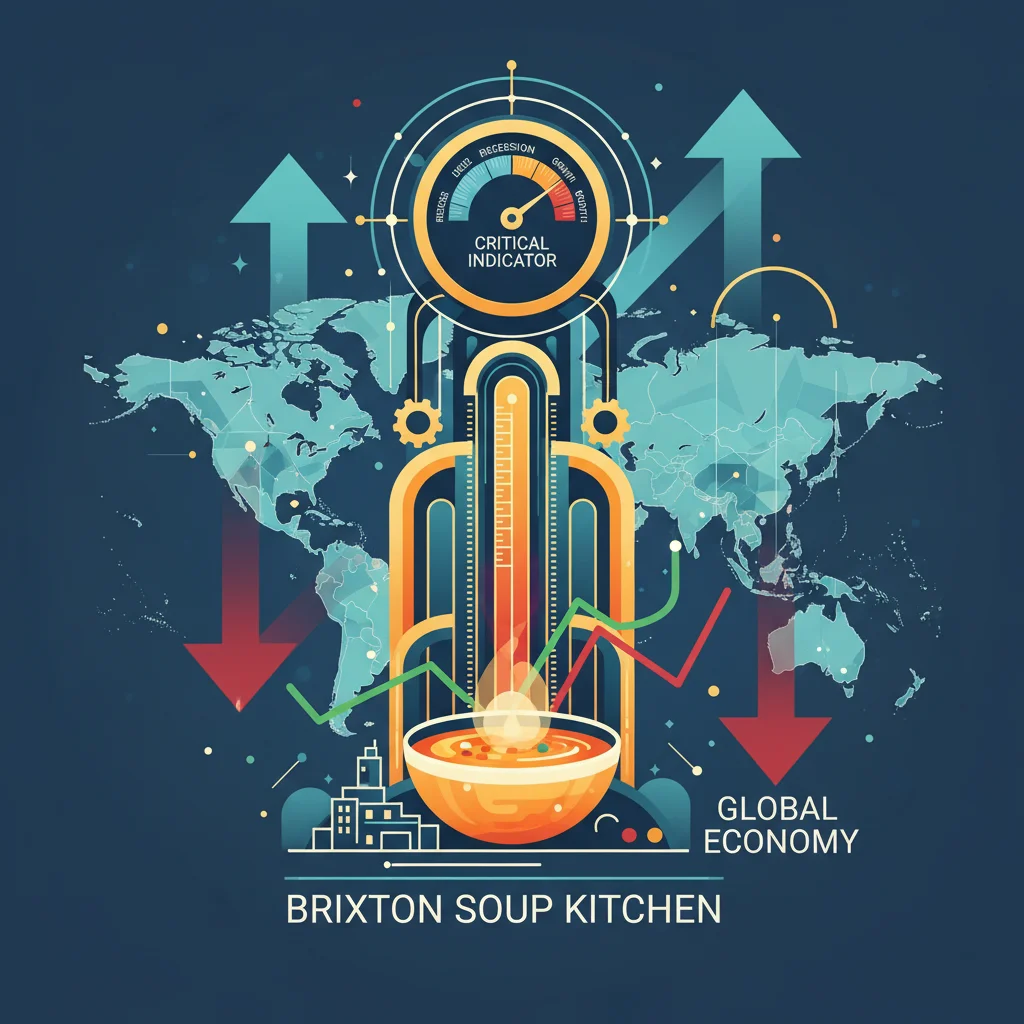
The Brixton Barometer: Why a Local Soup Kitchen Is a Critical Indicator for the Global Economy
In the heart of South London, a story is unfolding that should capture the attention of every investor, business leader, and finance professional. As volunteers at the Brixton Soup Kitchen prepare Christmas hampers for local families, they are not just handing out food and toys; they are providing a real-time, ground-level reading of our economic health. This isn’t just a story of seasonal charity; it’s a critical data point—a human-centric barometer measuring the immense pressures on households and the widening cracks in the broader economy.
For those of us who spend our days analyzing stock market trends, dissecting quarterly earnings reports, and building complex financial models, it can be easy to lose sight of the real-world impact of economic policy. The queues forming outside community support centers like the one in Brixton are the tangible result of macroeconomic forces. They represent the intersection where inflation rates, wage stagnation, and fiscal policy cease to be abstract concepts and become a harsh daily reality. Understanding this connection is not just a matter of social conscience; it is a fundamental component of astute financial analysis and long-term strategic investing.
The Macroeconomic Ripple Effect: From Central Banking to Community Kitchens
The increased demand seen by the Brixton Soup Kitchen is not an isolated event. It is a direct symptom of a challenging global economic climate. For years, central banks have navigated a complex landscape, attempting to curb inflation without triggering a deep recession. While metrics on the stock market may suggest a degree of recovery or resilience, the situation on the ground for millions of families tells a different story. This disconnect between Wall Street and Main Street is a significant risk factor that prudent investors must consider.
According to The Trussell Trust, a leading UK food bank network, over 1.5 million emergency food parcels were distributed between April and September 2023, a 16% increase from the previous year (source). This surge is a direct consequence of the cost-of-living crisis, where wage growth has failed to keep pace with soaring prices for essentials like food, energy, and housing. This is not just a social issue; it is a core challenge to the principles of sustainable economics.
Let’s examine the data that bridges the gap between central banking decisions and the need for a food hamper in Brixton.
Below is a simplified comparison illustrating the economic pressures on a typical household over the past few years, reflecting data trends from sources like the UK’s Office for National Statistics.
| Economic Indicator | Impact on Households | Implication for the Broader Economy |
|---|---|---|
| High Inflation Rate | Decreased purchasing power; savings eroded. The cost of a weekly shop has risen dramatically. | Reduced consumer spending on non-essential goods, potentially slowing economic growth. |
| Stagnant Real Wage Growth | Incomes do not stretch as far, forcing families to choose between heating and eating. | Lower consumer confidence and potential for increased credit defaults and loan delinquencies. |
| Increased Interest Rates | Higher mortgage and loan repayments, squeezing disposable income further. | Cooling effect on the housing market and reduced capital for business investment. |
When a significant portion of the population is under severe financial distress, the entire economic system is affected. Consumer spending, which accounts for a massive part of GDP, becomes fragile. The workforce becomes more stressed and less productive. The long-term stability that underpins a healthy stock market and robust investment environment is fundamentally undermined. The work of the Brixton Soup Kitchen, therefore, is a form of hyper-local, essential economic stabilization.
The ROI of Respect: How Workplace Civility Impacts Your Bottom Line
From Philanthropy to Strategic ESG: The Evolving Role of Corporate Finance
The situation in Brixton also presents a crucial question for business leaders and the investment community: What is our role in this? The traditional model of corporate philanthropy—writing a check at the end of the year—is no longer sufficient. The modern framework of Environmental, Social, and Governance (ESG) investing demands a more integrated and strategic approach.
The ‘S’ in ESG is precisely about issues like those faced by the families supported by the Brixton Soup Kitchen. It encompasses a company’s relationship with its workforce, the communities it operates in, and its customers. A company that ignores the social fabric in which it exists is taking on significant reputational and operational risk. Conversely, companies that actively invest in community resilience are building a more sustainable foundation for their own long-term success. This is not altruism; it is smart finance.
Investing in community initiatives can yield tangible returns:
- Enhanced Brand Reputation: Consumers and clients are increasingly loyal to brands that demonstrate genuine social responsibility.
- Improved Employee Engagement: Staff are more motivated and loyal when they believe their employer is a positive force in society.
- Reduced Systemic Risk: A stable, healthy, and economically secure community provides a better environment for business operations, with a more reliable workforce and customer base.
- Attraction of Capital: A growing pool of global capital, estimated in the trillions (source), is specifically allocated to investments with strong ESG credentials.
The challenge, and the opportunity, lies in moving beyond performative gestures. It requires a genuine integration of social metrics into the core business strategy, supply chain management, and investment decisions. It means asking not just “What is our profit margin?” but also “What is our impact on the economic well-being of the communities we serve?”
The Day Tripper Principle: How a Beatles Riff Unlocks the Code to Modern Investing and Finance
Financial Technology (Fintech) as a Catalyst for Change
This is where the worlds of community support and high finance can find powerful new synergies, driven by financial technology. The fintech revolution is not just about faster trading algorithms or more convenient mobile banking. It offers a suite of tools that can radically improve the efficiency, transparency, and impact of social investment and charitable giving.
Imagine a future where corporate donations to organizations like the Brixton Soup Kitchen are not just one-off payments but part of a transparent, technology-driven ecosystem. Blockchain, for example, could offer an immutable ledger to track donations from the source all the way to the final distribution of a food hamper, ensuring complete transparency and accountability. This is not a distant dream; the technology exists today. The World Food Programme has already used blockchain-based systems to deliver aid to over 100,000 refugees (source).
Here’s how fintech can bridge the gap between financial markets and social need:
| Fintech Application | Traditional Method | Modernized Approach & Impact |
|---|---|---|
| Donations & Payments | Cash, bank transfers, checks with high processing fees. | Micropayment platforms, fee-free digital transfers, and “round-up” features on banking apps streamline giving and maximize the funds received. |
| Transparency & Tracking | Annual reports, opaque fund allocation. | Blockchain-based ledgers provide real-time, public tracking of funds, building donor trust and improving efficiency. |
| Impact Investing | Limited to large institutional investors and private funds. | Crowdfunding platforms and tokenization allow retail investors to directly fund specific social projects with smaller capital amounts. |
This technological shift allows us to reimagine the flow of capital. Instead of a one-way street from corporate profits to charity, we can build a circular system where investing in social well-being is seen as a direct investment in the economic infrastructure that supports all market activity.
The Bottom Line: A Call to Action for the Financial Sector
The volunteers at the Brixton Soup Kitchen are on the front lines of a battle with deep economic roots. Their work is a testament to human compassion, but their growing workload is an indictment of a system that is leaving too many behind. For those of us in finance, banking, and economics, this is a call to action.
We must expand our definition of risk and opportunity. We must recognize that the long-term value of our portfolios and companies is intrinsically linked to the health and stability of the societies they are part of. A stock market that soars while food bank usage climbs is not a sign of a healthy economy, but a fragile one.
The solution is not to abandon the principles of finance, but to apply them more intelligently. It means using our tools of analysis to understand social trends, leveraging financial technology to create more effective solutions, and deploying capital not just for short-term gain, but for long-term, sustainable, and shared prosperity. The story of the Brixton Soup Kitchen is not a footnote to the economic news of the day; it is the headline.
The Great European Pivot: Why a Record 1 Billion in Private Capital is Flooding the Continent
As they pack those hampers, they are sending a clear signal to the market. The question is whether we are sophisticated enough to listen, interpret the data, and adjust our strategies accordingly. The most successful investors and business leaders of the next decade will be those who do.

Related Posts

The Economic Express: Unpacking Financial Lessons from a Train Timetable Revamp
Beyond the Headlines: Analyzing the Economic Ripple Effects of a Global Tragedy