Syria Flashpoint: Unpacking the Economic Fallout and What It Means for Your Investments
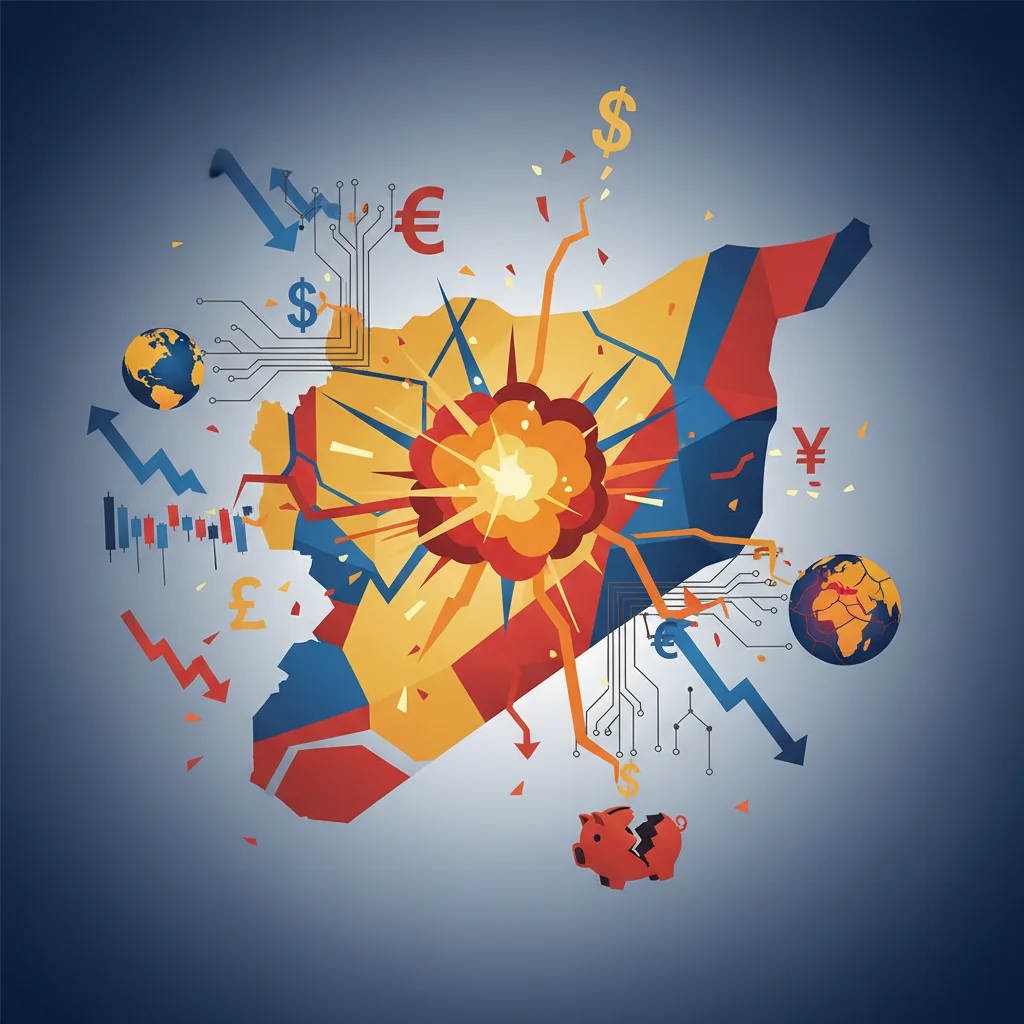
In the volatile landscape of global geopolitics, a single event can send shockwaves through financial markets, reminding investors that risk is not confined to balance sheets and earnings reports. The recent news of a deadly assault on a counterterrorism operation in Syria, which resulted in the deaths of two US soldiers and a civilian contractor, is one such event. While the human cost is the immediate tragedy, the incident, and the subsequent threat of retaliation from the White House, serves as a stark catalyst for market volatility, impacting everything from oil prices to the global economy.
For the discerning investor, finance professional, or business leader, understanding the chain reaction triggered by such geopolitical flashpoints is not just an academic exercise—it’s a critical component of risk management and strategic foresight. This is not merely a distant headline; it is a live variable in the complex equation of global economics that can directly influence portfolio performance, corporate strategy, and market sentiment. In this analysis, we will deconstruct the financial and economic implications of the recent events in Syria, moving beyond the headlines to explore the first, second, and third-order effects on your investments, the stock market, and key industrial sectors.
The Geopolitical Risk Premium: Translating Conflict into Market Volatility
At its core, investing is the pricing of risk. When geopolitical tensions escalate, particularly in a region as historically sensitive as the Middle East, markets immediately begin to price in a “geopolitical risk premium.” This premium is the extra return that investors demand to compensate for the heightened uncertainty. The attack in Syria, while localized, signals a potential for broader instability. This uncertainty manifests in several key areas of the financial world.
The first and most immediate reaction is often a “flight to safety.” This classic market behavior sees capital moving away from assets perceived as risky (like equities, especially in emerging markets) and into so-called “safe-haven” assets. These are assets that are expected to retain or increase in value during periods of market turmoil. The primary beneficiaries of this capital flight are typically:
- U.S. Treasury Bonds: Backed by the full faith and credit of the U.S. government, they are considered one of the safest investments in the world.
- Gold: The traditional hedge against inflation and uncertainty, gold often rallies when geopolitical tensions rise.
- The U.S. Dollar (USD) and Swiss Franc (CHF): These currencies are viewed as stable stores of value in a turbulent global environment.
This initial reaction sets the stage for more specific, sector-level impacts that can create both risks and opportunities for astute participants in the stock market.
From Freezer Aisle to the House of Lords: The Economic Signal of Richard Walker's Political Pivot
Immediate Market Tremors: Oil, Defense, and Safe Havens
While the broader market may experience a wave of risk-off sentiment, certain sectors have a much more direct and pronounced reaction to conflicts in the Middle East. Understanding these immediate impacts is crucial for anyone involved in active trading or sector-specific investing.
Crude Awakening: Why Oil Prices Are the First to React
The Middle East holds nearly half of the world’s proven oil reserves, and any sign of instability can spook energy markets. While Syria is not a major oil producer itself, its geographical location and the involvement of international powers like the U.S. and Russia mean any escalation could threaten key supply routes and neighboring producer states. The market’s fear is not about the loss of Syrian oil, but the potential for a wider conflict that could disrupt the flow of oil from giants like Saudi Arabia, Iraq, or through the critical Strait of Hormuz.
This fear translates into a higher price for crude oil (both Brent and WTI benchmarks). Traders immediately bid up prices to account for the potential of a future supply shock. For the global economy, this is a significant headwind. Higher energy prices act as a tax on consumers and businesses, potentially stifling economic growth and fueling inflation—a major concern for central banking institutions worldwide.
A Bull Market for Defense?
Conversely, the prospect of increased military action or heightened global tensions is often a powerful tailwind for the aerospace and defense industry. The threat of retaliation by the U.S. government signals a potential increase in military operations, munitions consumption, and demand for advanced surveillance and defense systems. As a result, stocks of major defense contractors often see a significant uptick following such events.
Below is a look at some of the key players in the U.S. defense sector whose market performance is closely tied to geopolitical events.
| Company | Stock Ticker | Primary Business Segments |
|---|---|---|
| Lockheed Martin | LMT | Aeronautics (F-35), Missiles and Fire Control, Rotary and Mission Systems |
| RTX Corporation (Raytheon) | RTX | Collins Aerospace, Pratt & Whitney, Raytheon (Missiles, Defense Systems) |
| Northrop Grumman | NOC | Aeronautics (B-21 Bomber), Defense Systems, Mission Systems, Space Systems |
| General Dynamics | GD | Aerospace (Gulfstream), Marine Systems (Submarines), Combat Systems |
Investors often rotate into these stocks as a defensive hedge against geopolitical instability, anticipating increased government spending and new contracts. This dynamic highlights the cold calculus of the market, where conflict can directly translate into financial gain for specific sectors.
The Digital Battlefield: Fintech, Trading, and the New Speed of Risk
The way financial markets process and react to geopolitical news has been fundamentally transformed by financial technology (fintech). The era of traders shouting across a crowded floor is long gone. Today, the initial reaction is driven by algorithms engaging in high-frequency trading.
These sophisticated systems are programmed to scan news wires, social media, and official statements for keywords. Within microseconds of a headline like “US soldiers killed in Syria,” these algorithms can execute massive trades, selling equities and buying oil futures or gold ETFs. This automation drastically accelerates the speed of market movements, amplifying initial volatility. For the average investor, this means that by the time you’ve read the news, the market has already priced it in.
Furthermore, the rise of fintech has democratized access to complex financial instruments. Retail investors using modern trading platforms can now use options to hedge their portfolios, invest in volatility-tracking ETFs (like VIX), or even speculate on alternative assets. In this context, some proponents of blockchain technology argue that decentralized assets like Bitcoin could serve as a non-sovereign safe haven, insulated from the policies of any single nation’s central banking system. While still a highly speculative and volatile asset class, the “digital gold” narrative often resurfaces during times of geopolitical stress, adding another layer to the complex world of modern investing.
Ripples Across the Global Economy: Beyond the Stock Market
The long-term impact of sustained instability in the Middle East extends far beyond daily trading fluctuations. It can fundamentally impact the health of the global economy through several channels:
- Supply Chain Disruption: The Middle East is a critical crossroads for global trade. Escalating conflict can raise insurance premiums for shipping, force vessels to take longer, more expensive routes, and create logistical bottlenecks that disrupt the flow of goods worldwide.
- Erosion of Business and Consumer Confidence: Pervasive uncertainty is toxic for economic growth. Businesses may delay capital investments, and consumers may cut back on spending, fearing higher energy prices and a gloomier economic outlook. This psychological factor can create a self-fulfilling prophecy of economic slowdown.
- Monetary Policy Complications: For central banks like the Federal Reserve, a geopolitical shock creates a difficult dilemma. A surge in oil prices can fuel inflation, suggesting a need for tighter monetary policy (higher interest rates). However, the negative impact on growth would suggest a need for looser policy. Navigating this “stagflationary” risk is a significant challenge for policymakers.
Navigating the Turbulence: A Strategic Approach for Investors
Given these complexities, how should an investor or business leader respond? The key is to avoid emotional, knee-jerk reactions and focus on long-term strategic principles.
Diversification is Not Just a Buzzword
A well-diversified portfolio is the first and best line of defense against any single point of failure, including geopolitical shocks. This means diversifying across asset classes (equities, bonds, commodities, real estate), geographic regions (to reduce exposure to any one area), and sectors. The Syria incident is a potent reminder of why holding assets that are negatively correlated—like equities and treasury bonds—is a cornerstone of sound portfolio construction.
Long-Term Vision vs. Short-Term Panic
History has shown that while geopolitical events cause short-term volatility, disciplined, long-term investors who stay the course are often rewarded. Selling into a panic is rarely a winning strategy. Instead, such moments of volatility can present buying opportunities in high-quality companies whose long-term fundamentals remain unchanged, even if their stock prices are temporarily depressed by macro fears.
The Day Tripper Principle: How a Beatles Riff Unlocks the Code to Modern Investing and Finance
Conclusion: The Unavoidable Variable of Geopolitics
The tragic events in Syria are a powerful illustration that the worlds of international politics and finance are inextricably linked. For those of us focused on the economy, investing, and financial markets, it is a reminder that our models and forecasts must always account for the unpredictable nature of human conflict. By understanding the mechanisms through which geopolitical risk is transmitted to the markets—from oil prices and defense stocks to the high-speed reactions of fintech-driven trading—we can better prepare our portfolios and our strategies. The ultimate goal is not to predict the next flashpoint, but to build a financial strategy that is resilient enough to withstand the inevitable shocks when they arrive.