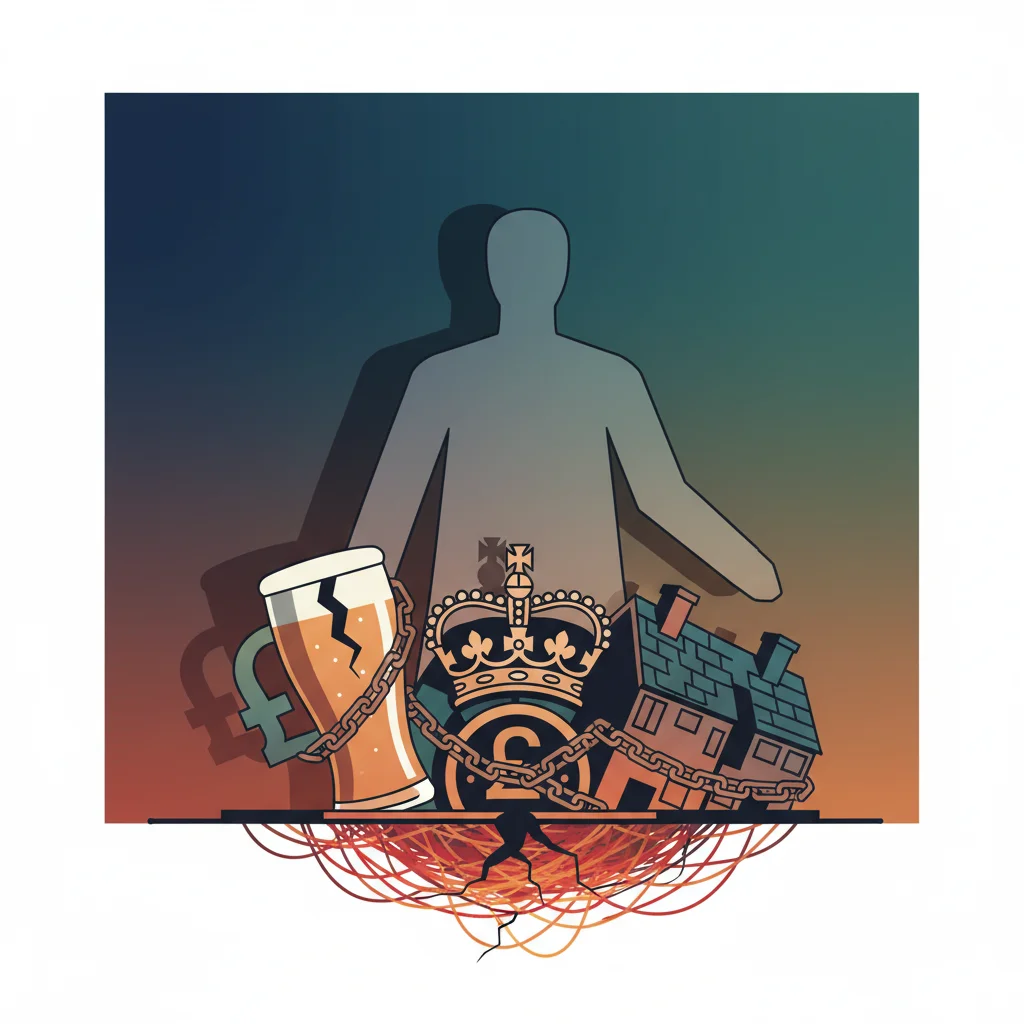
The Silent Landlord: How Outdated Taxes Are Brewing a Crisis for Britain’s Pubs
The Festive Façade: A Deeper Look into the UK Hospitality Economy
As winter nights draw in, the warm glow of a British pub offers a familiar and cherished refuge. The clinking of glasses, the murmur of conversation, and the festive decorations create a narrative of communal cheer and robust business. For many, this period represents the most wonderful time of the year—and for publicans, the most profitable. However, beneath this merry surface, a serious economic hangover is looming, one that threatens to last long after the New Year’s celebrations have faded. The culprit isn’t dwindling patronage but a far more intractable foe: a punishing and archaic system of business rates.
While the hospitality sector has demonstrated remarkable resilience in its post-pandemic recovery, it now faces a perfect storm of financial pressures. Soaring energy costs, persistent inflation, and a cost-of-living crisis squeezing consumer pockets have already thinned margins to a razor’s edge. Now, the withdrawal of government support measures and a sharp hike in business rates are threatening to be the final, sobering blow. This isn’t just a story about the price of a pint; it’s a critical case study in fiscal policy, the health of the UK economy, and the challenging landscape for investing in one of the nation’s most iconic industries.
Deconstructing the Taxman’s Toll: What Are Business Rates?
For those outside the world of commercial property and corporate finance, “business rates” can seem like an abstract concept. In reality, they are one of the most significant fixed costs a physical business faces. Essentially, business rates are a tax on non-domestic properties—shops, offices, warehouses, and, of course, pubs. The amount a business pays is determined by its property’s “rateable value,” an official estimate of its open market rental value, which is then multiplied by a factor set by the government.
The system’s rigidity is its core problem. Unlike corporation tax, which is based on profits, business rates are payable regardless of whether a business is profitable or even open. This transforms the local council into a “silent landlord,” demanding a hefty rent that doesn’t fluctuate with the economic seasons. After a period of pandemic-related relief, which saw rates discounted by 75% for retail, hospitality, and leisure businesses, this support is scheduled to end. According to industry leaders, this will result in a staggering £250mn-a-year tax hike for the pub sector alone, a burden that many will struggle to absorb.
The €260 Billion Question: Can Frozen Russian Assets Rebuild Ukraine?
A Sobering Reality: The Numbers Behind the Crisis
The financial impact of these changes is not theoretical; it’s a stark reality appearing on balance sheets and threatening future viability. The recent property revaluation, the first since 2017, has led to significant increases in rateable values, particularly for successful, well-located pubs. This revaluation, intended to reflect changes in the property market, has inadvertently punished the very businesses that have successfully navigated the turbulent post-pandemic landscape.
Consider the perspective of major players in the stock market. Simon Emeny, chief executive of brewers Fuller’s, noted that for every pound a pub’s rateable value increases, it adds a direct pound to their tax bill, a cost that comes straight from the bottom line. For a large, historic pub in a prime London location, this can translate into a tax bill exceeding £200,000 annually. London-based pub group Young’s reported that its business rates are set to jump from £13mn to £19mn next year, a crippling 46% increase.
To put the scale of these costs into perspective, let’s compare the previous relief scheme with the impending reality for a hypothetical, successful city-centre pub.
| Cost Component | Under 75% Relief Scheme | Post-April 2024 (Full Rates) | Percentage Increase |
|---|---|---|---|
| Annual Rateable Value | £120,000 | £120,000 | 0% |
| Applicable Multiplier (approx.) | 0.512 | 0.512 | 0% |
| Gross Annual Rates Bill | £61,440 | £61,440 | 0% |
| Relief Applied | -£46,080 (75%) | £0 (0%) | N/A |
| Final Rates Payable | £15,360 | £61,440 | 300% |
This simplified example illustrates how the removal of relief results in a 300% increase in the actual cash paid, even with no change in the property’s underlying value. This is a direct hit to profitability and a significant deterrent to future investing in property upgrades or staff expansion.
The Ripple Effect: Beyond the Bar
The financial strain on pubs sends powerful and damaging ripples throughout the entire economy. A struggling pub sector directly impacts a vast network of suppliers, from large breweries to local farms, bakeries, and service providers. This creates a domino effect, where the financial instability of one sector dampens growth and security in many others. According to the British Beer and Pub Association, the industry supports an estimated 936,000 jobs in the UK, making its health a matter of national economic importance.
Furthermore, from an investing standpoint, the uncertainty created by this fiscal cliff-edge makes the sector less attractive. Potential investors, whether individuals looking at the stock market or private equity firms, will be wary of committing capital to an industry where government policy can arbitrarily wipe out profits overnight. This capital flight starves the sector of the funds needed for innovation, refurbishment, and growth, leading to a cycle of decline.
The €260 Billion Dilemma: Is the EU Sacrificing the Euro's Future to Fund Ukraine?
The Search for a Sustainable Solution
Industry bodies and business leaders are not asking for perpetual handouts; they are calling for systemic reform. The consensus is that the current business rates system is no longer fit for purpose. Proposed solutions range from permanently lowering the “multiplier” used to calculate the tax, to completely delinking the tax from property values and tying it more closely to a business’s actual revenue or profit. Such a change would introduce a level of fairness and predictability that is currently absent, allowing businesses to plan and invest with greater confidence.
In this challenging environment, the role of modern banking and financial technology becomes ever more critical. Advanced forecasting tools, AI-driven cost management platforms, and flexible business financing solutions can provide publicans with the agility to navigate these turbulent waters. However, fintech can only provide tools to manage the storm; it cannot change the weather. The ultimate solution must come from a governmental policy that understands the principles of modern economics and fosters, rather than punishes, business growth.
The government’s argument is often one of fiscal responsibility, suggesting that tax reliefs are unsustainable. However, this perspective may be shortsighted. The cost of widespread business failures—in terms of lost tax revenue from corporation tax, VAT, and income tax from employees, as well as increased welfare costs—could easily outweigh the savings from ending the rates relief. A holistic view of the economy is required, one that recognizes the immense value, both social and economic, that a thriving hospitality sector provides.
Conclusion: A Call for Lasting Reform, Not a Temporary Reprieve
The festive lights of Britain’s pubs are, for now, still shining. But they are flickering under the immense pressure of an outdated and punitive tax regime. The impending hike in business rates is more than just another line item on an expense report; it is an existential threat to thousands of businesses that form the backbone of communities across the country. This is a critical moment that demands more than temporary fiscal patches. It requires a bold, forward-thinking approach to business taxation that reflects the realities of the 21st-century economy.
For investors, business leaders, and policymakers, the fate of the British pub is a barometer for the health of the wider SME landscape. Allowing these vital community assets to be taxed out of existence would be an act of profound economic self-harm. The time has come to call last orders on a tax system that has long passed its sell-by date and brew a new, sustainable model that allows our pubs, and the businesses on our high streets, to thrive for generations to come.

Related Posts
Praise the Youth and They Will Flourish: Ireland’s Ancient Proverb as a Modern Blueprint for Economic Growth

Thailand’s Political Crossroads: Decoding the Economic Impact of an Impending Election