The Bittersweet Economy: What Your Shrinking Chocolate Bar Reveals About Global Finance and Investing
The Curious Case of the Disappearing Chocolate
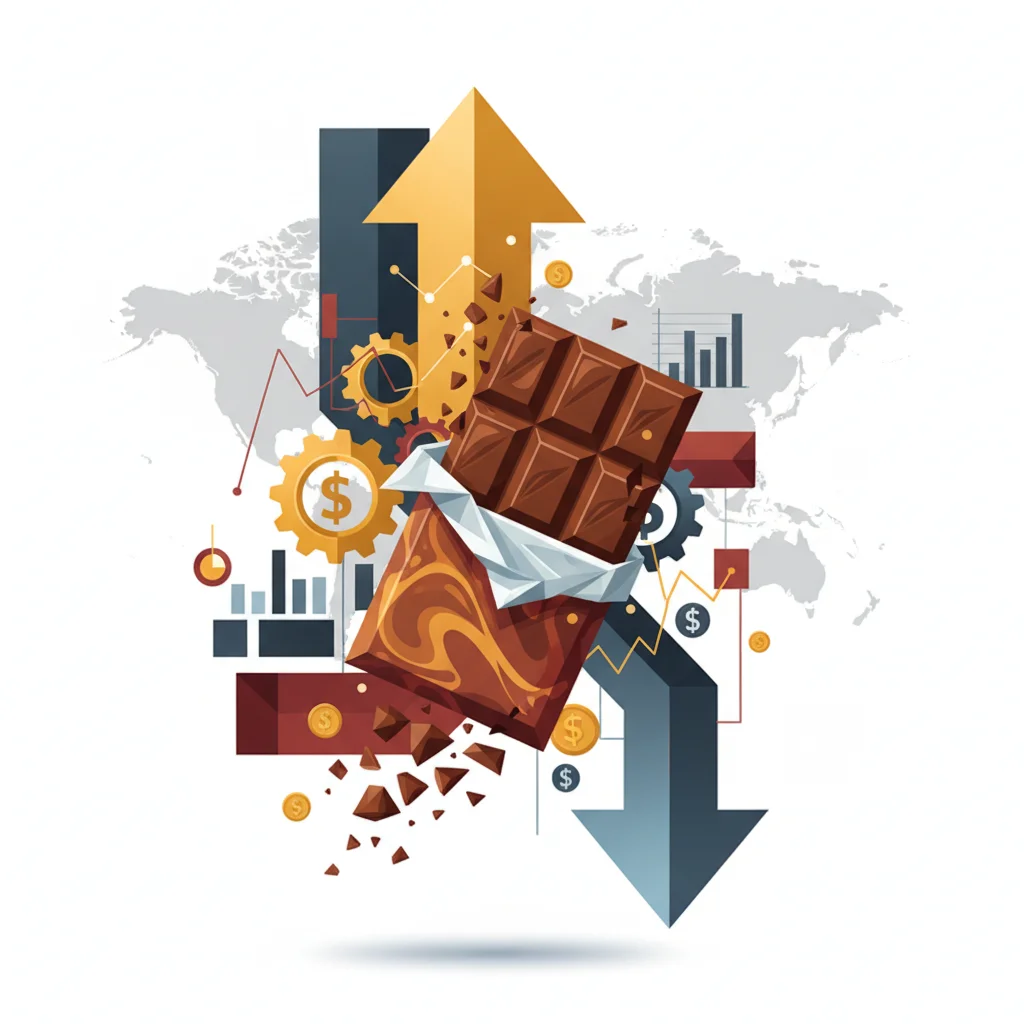
Have you ever reached for your favorite chocolate bar, only to feel it’s a bit… lighter? Or perhaps that rich, decadent flavor seems a little less intense? You’re not imagining it. This phenomenon, where products get smaller while the price remains the same, has a name: shrinkflation. And its close cousin, skimpflation—where the quality of ingredients is subtly reduced—is also at play. As a recent BBC report highlights, even our festive treats are falling victim to these subtle economic pressures, becoming smaller, more expensive, and in some cases, less chocolatey.
While a slightly smaller piece of candy might seem like a trivial consumer complaint, it’s actually the tip of a massive economic iceberg. For professionals in finance, investing, and business leadership, that shrinking chocolate bar is a powerful, tangible symbol of the complex interplay between global supply chains, corporate strategy, consumer psychology, and the broader economy. It’s a quiet confession from corporations about inflation, margin pressure, and their predictions for the future. Understanding this phenomenon goes beyond the checkout aisle; it offers a crucial lens through which to analyze market trends, evaluate corporate health, and make smarter financial decisions.
Beyond the Wrapper: Defining the Twin Threats of Shrinkflation and Skimpflation
Before diving into the intricate financial mechanics, it’s essential to clearly define these concepts. They are distinct strategies companies employ to protect their profit margins without alarming consumers with overt price hikes.
- Shrinkflation: This is the more common tactic. The manufacturer reduces the size or quantity of a product while the retail price remains stable or increases only slightly. The packaging often remains the same size, masking the change. The per-unit cost for the consumer effectively increases, but it’s a less noticeable form of inflation.
- Skimpflation: This is arguably a more insidious strategy. The size and price of the product may not change, but the company reformulates it with cheaper ingredients. In the case of chocolate, this could mean reducing the percentage of cocoa butter—the expensive, flavor-defining ingredient—and substituting it with cheaper vegetable fats. This directly impacts product quality and is a key reason your favorite treat might taste different (source).
Companies choose these methods based on sophisticated analyses of consumer behavior. Decades of market research show that consumers are far more sensitive to changes in price (price elasticity) than they are to subtle changes in weight or ingredient lists. A 10% price increase is immediately noticeable and may drive a customer to a competitor. A 10% reduction in size often goes completely unnoticed.
The Canary in the Coal Mine: Why a Turkey Farm Scandal Signals a Seismic Shift in Financial Risk
The Economic Cauldron: Why Is This Happening Now?
The rise of shrinkflation and skimpflation isn’t arbitrary; it’s a direct response to a perfect storm of macroeconomic pressures that have squeezed corporate balance sheets. The story of chocolate is a perfect case study in global economics.
The primary driver is soaring input costs. This includes:
- Commodity Prices: Cocoa, the heart of our story, has seen its price skyrocket on the global trading markets. West Africa, which produces over 70% of the world’s cocoa, has been battered by extreme weather events linked to climate change and crop diseases. Poor harvests in countries like Ghana and Ivory Coast have created a severe supply crunch, sending cocoa futures to record highs. For a company like Hershey or Nestlé, this is a direct hit to their cost of goods sold (COGS).
- Energy and Transportation: The cost to power factories, transport raw materials, and distribute finished products has remained elevated due to geopolitical instability and lingering supply chain disruptions from the pandemic.
- Labor Costs: A tight labor market in many developed nations has led to higher wages, which adds to the overhead for manufacturers.
Faced with these rising costs, a company has three primary choices: absorb the cost and accept lower profit margins, raise prices directly, or implement stealth strategies like shrinkflation. For any publicly traded company accountable to the stock market, consistently lower margins are not a viable long-term option.
An Investor’s Guide to Reading the Tea Leaves (or Chocolate Wrappers)
For investors and finance professionals, these packaging changes are more than just an annoyance; they are valuable data points. They provide insight into a company’s operational efficiency, pricing power, and overall strategic health.
When analyzing a company in the Consumer Packaged Goods (CPG) sector, consider the following:
- Check the Margins: In an inflationary environment, a company that maintains or grows its gross profit margins is likely employing effective pricing strategies, which may include shrinkflation. Scrutinize their quarterly earnings reports and listen to investor calls for language around “price/mix optimization” or “productivity initiatives.”
- Brand Strength as a Moat: Companies with powerful, iconic brands have more “permission” from consumers to adjust sizing or pricing. A market leader can often get away with shrinkflation more easily than a smaller competitor. This pricing power is a key factor in its long-term investing thesis.
- Volume vs. Revenue Growth: A crucial metric to watch is sales volume. If a company’s revenue is growing but its sales volume is flat or declining, it’s a strong indicator that growth is being driven entirely by price hikes or shrinkflation. This can be a red flag that customers are beginning to push back.
To illustrate the hidden cost, let’s compare how different forms of inflation can impact a consumer’s wallet, even when the “sticker price” seems unchanged.
Below is a table demonstrating the effective price increase on a hypothetical chocolate bar undergoing shrinkflation.
| Year | Product Size (grams) | Retail Price | Price Per Gram | Effective Price Increase (YoY) |
|---|---|---|---|---|
| 2022 | 100g | $2.00 | $0.0200 | – |
| 2023 (Shrinkflation) | 90g | $2.00 | $0.0222 | 11% |
| 2024 (Price Increase) | 90g | $2.20 | $0.0244 | 10% |
As the data shows, a 10% reduction in size in 2023 resulted in an 11% effective price increase for the consumer, a change far more significant than the stable $2.00 price tag would suggest. This is the hidden inflation that doesn’t always show up in headline CPI figures but is felt by households every day.
Netflix's Endgame: Decoding the Billion-Dollar Warner Bros. Deal and Its Impact on the Stock Market
The Future of Transparency: Can Technology Be the Antidote?
While the current situation seems bleak for consumers, emerging technologies offer a potential path toward greater transparency and accountability. This is where the worlds of consumer goods and advanced financial technology begin to intersect.
Consider the role of blockchain. Beyond its applications in cryptocurrency, blockchain’s core function as an immutable, transparent ledger has immense potential for supply chain management. A food company could, in theory, log every step of its production process on a blockchain—from the cocoa farm in Ghana to the factory to the retailer. A simple QR code on the wrapper could allow a consumer to see the exact origin, quality certifications, and precise percentage of cocoa in their chocolate bar. This would make skimpflation virtually impossible to hide.
Furthermore, the rise of fintech and AI-powered data analytics is a double-edged sword. While companies currently use this technology to optimize shrinkflation strategies, consumer-focused fintech apps could soon empower shoppers. Imagine an app that scans a barcode and instantly compares the product’s current size and price-per-gram to its historical data, alerting you to any recent changes. This would level the playing field, shifting power back to the consumer and forcing brands to compete on transparency.
These technological shifts could fundamentally alter the relationship between corporations, consumers, and even the nature of banking and trade finance, as provenance and quality become programmatically verifiable.
Netflix's Billion Gambit: Analyzing the Warner Bros Acquisition That's Reshaping Hollywood
The Final Bite: A New Economic Reality
The story of the shrinking chocolate bar is far more than an anecdote. It is a masterclass in modern economics and corporate finance, played out on a global scale. It reveals how companies navigate the treacherous waters of inflation, supply chain volatility, and shareholder expectations. It demonstrates a deep, data-driven understanding of human psychology and the subtle art of pricing strategy.
For the average person, it’s a call to be a more vigilant consumer. For business leaders, it’s a cautionary tale about the delicate balance between profitability and brand trust. And for the investor, it is a clear signal to look beyond the headline numbers, to understand the qualitative strategies driving corporate performance, and to recognize that some of the most important market indicators can be found not on a stock ticker, but in the palm of your hand.