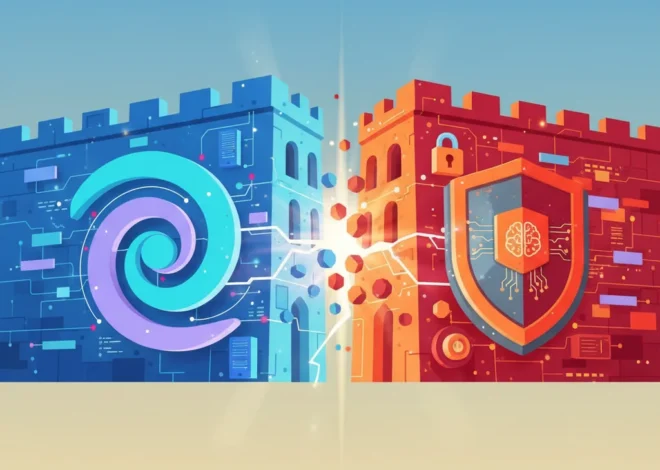
The Deal That Died: What a Failed Hollywood Megamerger Teaches Tech About Money, Power, and AI
In the high-stakes world of corporate mergers, some stories play out like a Hollywood blockbuster. The recent saga involving Paramount, Skydance Media, and Warner Bros. Discovery is a prime example. On the surface, it’s a tale of ambition and power—a bold, hostile bid to create a media titan. But if you look closer, beneath the glamour and boardroom drama, lies a critical lesson for everyone in the tech industry, from startup founders to software developers.
The deal, led by Skydance CEO David Ellison with backing from Paramount, was an audacious attempt to acquire Warner Bros. Discovery. However, this blockbuster proposal was dead on arrival. Why? According to a report from the Financial Times, the bid was swiftly rebuffed over serious concerns about its financial backing, which included sovereign wealth funds from China and the Middle East. This wasn’t just a financial quibble; it was a geopolitical red flag.
For those of us building the future with code, cloud infrastructure, and artificial intelligence, this might seem distant. But it’s not. This story is a powerful signal that in today’s interconnected world, the DNA of your funding and the security of your data are as crucial as the quality of your software. Let’s unpack what this Hollywood drama means for the tech ecosystem and how the principles of innovation, cybersecurity, and automation are reshaping the M&A landscape.
The Geopolitical Ghost in the Machine
At first glance, turning down a massive offer because of its funding source seems unusual. Sovereign wealth funds (SWFs) are major players in global finance, investing trillions in everything from real estate to tech startups. However, the origin of the money matters more than ever, especially when the target company is a custodian of culture, data, and intellectual property—like a media conglomerate.
Warner Bros. Discovery isn’t just a collection of movie studios. It’s a colossal tech company. Think about it:
- Massive Cloud Infrastructure: It runs global streaming services (like Max) that rely on sophisticated cloud architecture to deliver content to hundreds of millions of users.
- Rich User Data: It holds vast amounts of personal data, viewing habits, and behavioral analytics, which are invaluable for content personalization and advertising.
– Proprietary Software: Its production pipelines, from CGI rendering farms to digital asset management, are powered by custom and licensed software.
Concerns over backing from certain nations aren’t just about politics; they’re fundamentally about cybersecurity and data integrity. A foreign state actor with influence over a major media-tech entity could potentially access sensitive user data, influence content narratives, or gain access to valuable intellectual property. This risk is something that keeps CISOs and national security experts up at night, and it appears it was enough to make Warner Bros.’ board walk away. The potential for data exfiltration or manipulation represents a liability that could dwarf the deal’s value.
Cosmic Rays vs. Code: Why 6,000 Airbus Jets Need a Software Patch and What It Teaches the Tech World
Due Diligence in the Age of AI: Beyond the Balance Sheet
The failed bid highlights a profound shift in how corporate due diligence must be conducted. The old model—focused primarily on financial statements, legal liabilities, and market share—is dangerously outdated. In an economy where a company’s value is intrinsically tied to its technology stack, its data assets, and its digital security posture, the M&A playbook needs a serious upgrade.
This is where the tools and principles of the tech world become indispensable. The modern due diligence process is increasingly driven by software, automation, and artificial intelligence.
Imagine a team of analysts using machine learning algorithms to scan a target company’s entire digital footprint. These AI-powered systems can:
- Analyze Codebases: Automatically scan millions of lines of code to identify security vulnerabilities, reliance on outdated libraries, or potential IP infringement. This is a level of technical scrutiny that’s impossible to achieve manually at scale.
- Assess Cybersecurity Risks: Use predictive analytics to model potential breach scenarios, evaluate the strength of network defenses, and identify non-compliance with data privacy regulations like GDPR or CCPA.
- Evaluate Cloud Spend and Efficiency: Ingest billing data from AWS, Azure, or GCP to identify wasteful spending, analyze architectural efficiency, and project future infrastructure costs with stunning accuracy. This is a critical task for any company running a large-scale SaaS platform.
- Uncover Hidden Relationships: AI can parse through communications, contracts, and public records to map out complex investor relationships and supply chain dependencies, flagging potential geopolitical risks like the ones that sank the Paramount bid.
This tech-centric approach transforms due diligence from a reactive, box-checking exercise into a proactive, strategic intelligence operation. It’s about understanding not just what a company is worth today, but what its technological foundation will allow it to become tomorrow.
A Tale of Two Diligence Models
To illustrate the shift, let’s compare the traditional M&A checklist with a modern, tech-infused approach. The difference is stark, moving from a static snapshot to a dynamic, predictive analysis.
| Traditional Due Diligence | Modern, Tech-Centric Due Diligence |
|---|---|
| Review audited financial statements. | Use AI to analyze real-time financial data, flagging anomalies and predicting cash flow. |
| Manual review of key contracts. | Employ Natural Language Processing (NLP) to scan all contracts for risky clauses and obligations. |
| Interview key IT personnel. | Conduct automated, non-invasive scans of the entire network and cloud environment for vulnerabilities. |
| Assess market position through reports. | Use machine learning to analyze social media sentiment, web traffic, and competitor data. |
| Rely on investor disclosures. | Leverage data intelligence platforms to map investor networks and identify hidden geopolitical risks. |
AI vs. Artist: The Jorja Smith Case and the Future of Musical Identity
Actionable Lessons for Startups and Innovators
So, what does a boardroom battle in Hollywood have to do with your startup’s journey or your career in programming? Everything. The macro-level trends that shape billion-dollar deals eventually trickle down and define the environment for everyone.
1. Know Your Capital, Not Just Your Code
For early-stage startups, the source of your funding is a foundational part of your company’s identity. While the goal is often to secure capital from any willing source, it’s crucial to understand the potential long-term implications. An investor with ties that could become a liability later on—especially if you plan to sell to a US-based enterprise or a government-related entity—can kill a future acquisition. Be as diligent about your investors as you expect them to be about you. This proactive stance is a form of long-term strategic innovation.
2. Build for the Exit, Technologically
From day one, build your company as if you’re preparing for a rigorous tech due diligence audit. This means:
- Clean, Documented Code: Don’t just make it work; make it understandable. An acquirer’s engineering team will be looking through your repositories.
- Robust Cybersecurity: Implement security best practices from the start. A history of data breaches is a massive red flag that can slash your valuation. A study found that M&A deals for companies that suffered a breach saw their value drop by an average of 5% (source).
- Scalable Architecture: Build on a modern, scalable cloud foundation. Proving that your infrastructure can handle 10x growth without a complete rebuild is a huge selling point.
3. Your Data Is Your Crown Jewel
Whether you’re building a simple SaaS tool or a complex artificial intelligence platform, your data—and how you protect it—is a core asset. Ensure you have clear data governance policies, comply with privacy regulations, and can demonstrate a secure chain of custody for all sensitive information. In an acquisition, the quality and security of your data can be more valuable than your revenue.
David vs. Goliath, AI Edition: The German Startup Challenging Google and OpenAI
The Final Cut: A New Era of Corporate Strategy
The failed Paramount-Warner Bros. bid is more than just industry gossip. It’s a landmark case study in the new realities of global business. It demonstrates that the worlds of technology, finance, and geopolitics are no longer separate domains; they are deeply intertwined forces shaping corporate destiny.
For the modern entrepreneur, developer, or tech leader, the message is clear. Success is no longer just about brilliant programming, disruptive innovation, or finding product-market fit. It’s also about navigating a complex global landscape where your choice of investors, your cybersecurity posture, and the integrity of your data can make or break your future. The blockbuster deals of tomorrow won’t just be signed by CEOs and bankers; they’ll be vetted by data scientists and built on a foundation of digital trust.