The Canary in the Coal Mine: What One Pub’s ‘Warm Space’ Initiative Reveals About the Global Economy
The Unlikely Economic Indicator: A Pint of Ale vs. Central Heating
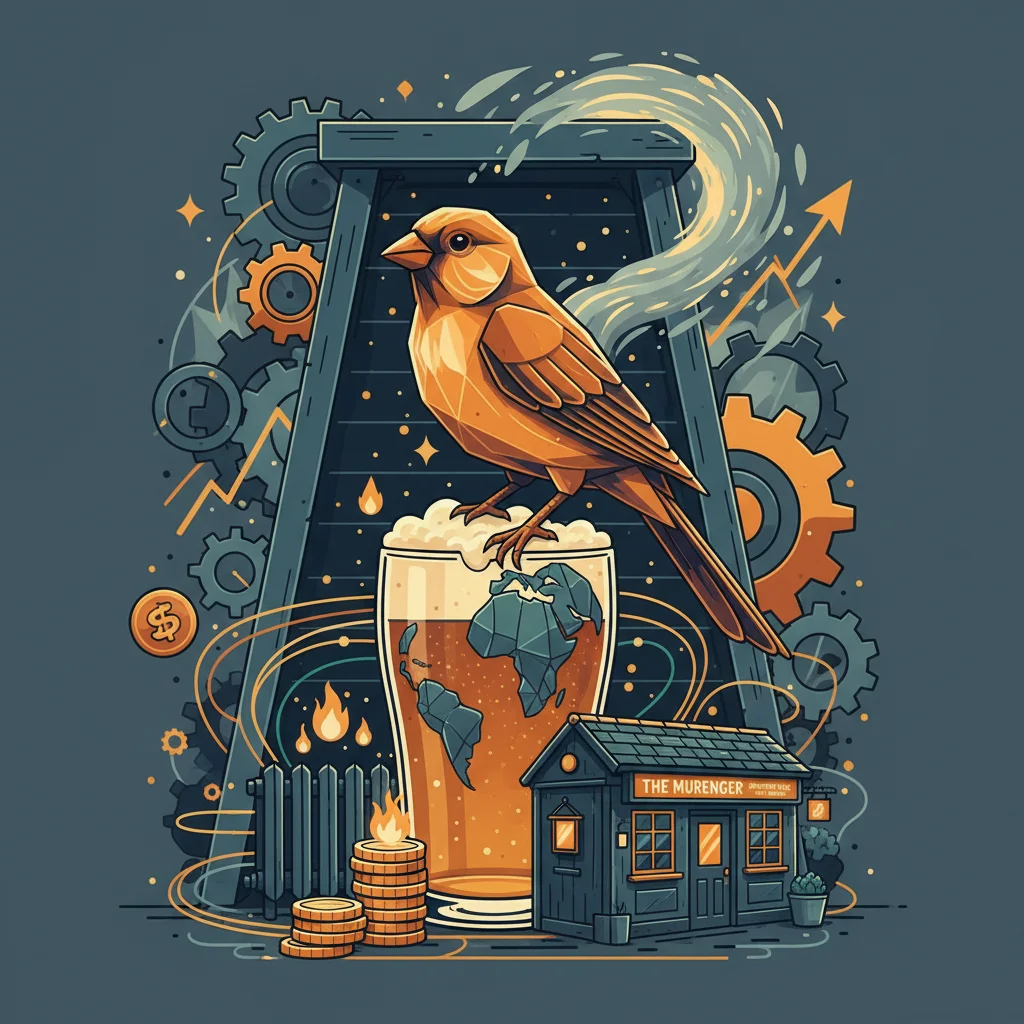
In the historic city of Newport, Wales, a pub named The Murenger has become an unexpected barometer of the current economic climate. The establishment, a beloved “second home” to its regulars, recently declared itself a “warm space.” The reason? As landlady Anna Rickets explained, patrons have been telling her it is now cheaper to spend an afternoon in the pub than to heat their own homes. This isn’t just a heartwarming story of community spirit; it’s a stark, ground-level signal of profound macroeconomic pressures that investors, business leaders, and finance professionals must not ignore.
While central banks and financial analysts scrutinize inflation data and stock market fluctuations, the real story of the economy is often told in these small, everyday decisions. The choice between paying for domestic energy or buying a drink at a local pub is a microeconomic data point laden with macroeconomic implications. It speaks volumes about disposable income, consumer confidence, and the shifting patterns of spending that will define the coming economic quarters. This single establishment’s response to its customers’ financial reality serves as a powerful case study in business agility, consumer behavior, and the hidden opportunities within a challenging economic landscape.
Deconstructing the Pressure: Inflation, Energy, and the Squeeze on Consumers
The situation at The Murenger is not an isolated incident but a direct consequence of a perfect storm of economic factors. For years, the global economy has been grappling with persistent inflationary pressures, disrupting everything from supply chains to household budgets. In the UK, for instance, the Consumer Prices Index (CPI) has seen significant volatility, with core components like energy and food driving much of the increase. According to the Office for National Statistics (ONS), energy prices have been a primary contributor to the high inflation rates, placing an unprecedented burden on households.
This isn’t merely a statistical anomaly; it translates to tangible hardship. When the cost of a non-negotiable essential like home heating skyrockets, consumers are forced into a brutal process of financial triage. Discretionary spending is the first casualty, but as the pressure mounts, the line between ‘discretionary’ and ‘essential’ begins to blur. Is a warm home a luxury? The patrons of The Murenger are voting with their feet, suggesting that for a few hours, at least, it’s a service they are willing to outsource.
This shift has profound implications for the broader economy. Sectors reliant on in-home consumption—from home improvement and durable goods to streaming services—may face significant headwinds. Conversely, businesses that offer high value for money, social connection, and essential comforts like warmth could demonstrate surprising resilience. The pub, in this context, is not just selling beverages; it’s selling warmth, light, and community—a bundle of services that has become, paradoxically, a budget-friendly alternative to staying home.
Beyond the Balance Sheet: The True Cost of Becoming a UK Tax Exile
To put this trade-off into perspective, let’s analyze the comparative costs. While exact figures vary by home size, insulation, and energy tariff, the underlying economics of the decision are clear.
| Expense Category | Estimated Hourly Cost (Home) | Estimated Hourly Cost (Pub) | Notes & Analysis |
|---|---|---|---|
| Energy (Heating & Lighting) | £0.75 – £2.00+ | £0.00 (Included) | Based on average UK gas and electricity prices for heating a living space. This is a direct, unavoidable cost at home. |
| Basic Consumption | £0.50 (Tea/Coffee) | £1.50 (Half-pint/Soft Drink) | Assumes a minimum purchase is required at the pub. The “entry fee” is a consumable good. |
| Social & Mental Wellbeing | Variable / Potentially Negative | Positive | Isolation at home vs. community engagement. This intangible value is a key driver in the decision-making process. |
| Total Estimated Cost (3 Hours) | £3.75 – £6.75+ | £4.50 (for 3 drinks) | The pub becomes cost-competitive or even cheaper, especially when factoring in the non-financial benefits. |
The Agile SME: Turning Crisis into Customer Loyalty
The response of The Murenger’s management is a masterclass in agile small and medium-sized enterprise (SME) strategy. Instead of simply observing their customers’ plight, they actively adapted their business model. By branding themselves as a “warm space,” they are not only performing a public service but are also implementing a brilliant marketing and customer retention strategy. This move builds immense goodwill and reinforces the pub’s role as a vital community hub, fostering a level of loyalty that no advertising campaign could purchase.
This strategy contains several key lessons for business leaders:
- Listen to Ground-Level Intelligence: The most valuable market research came directly from conversations with customers. Businesses that maintain open channels of communication with their clientele can identify emerging needs and pivot far more quickly than competitors who rely solely on high-level market data.
- Reframe Your Value Proposition: The Murenger is no longer just selling beer; it’s selling a solution to a problem. By understanding the core “job to be done” for their customers—in this case, “staying warm and connected affordably”—they have expanded their addressable market from “people who want a drink” to “people who are cold.”
- Embrace Corporate Social Responsibility (CSR) as a Growth Engine: This initiative is a form of CSR, but it’s not a cost center. It’s a revenue driver that enhances brand reputation, attracts new customers, and solidifies the loyalty of existing ones. In an era of conscious consumerism, authentic community engagement is a powerful competitive differentiator.
Implications for Investing, Banking, and Financial Technology
The story of one Welsh pub has ripple effects that extend into the highest echelons of finance. Understanding these ground-level shifts is critical for making informed decisions in today’s volatile market.
For the stock market investor, this trend demands a re-evaluation of consumer-facing sectors. Companies that provide essential, low-cost “out-of-home” experiences may prove more defensive than previously thought. This includes not just hospitality venues but also cinemas, libraries, and community centers. Conversely, companies reliant on high-cost, home-centric discretionary spending should be scrutinized for their ability to weather a prolonged period of consumer belt-tightening. The key is to look for businesses that offer a high “perceived value per dollar” in the eyes of a cash-strapped consumer.
For the banking sector, this is a clear signal of rising financial distress among both individuals and small businesses. Banks have a crucial role to play in providing flexible financial products, from short-term credit solutions for SMEs to accessible financial advice for individuals. Proactive engagement and support can mitigate defaults and build long-term customer relationships. The Murenger’s success is predicated on its customers having just enough disposable income to afford a pint; the banking system is a key variable in that delicate equation.
Finally, this is a call to action for the financial technology (fintech) industry. The core problem facing these pub patrons is a budgeting and cash flow crisis. Fintech solutions are uniquely positioned to help. As noted in a report by Ernst & Young, fintechs can empower users to manage the cost-of-living crisis through innovative tools. Imagine apps that:
- Automatically analyze spending and suggest cost-effective alternatives (e.g., “You could save £5 today by spending three hours at a local warm bank instead of heating your home”).
- Utilize open banking to provide real-time alerts on energy consumption and budget overruns.
- Facilitate community-based micro-lending or support networks, potentially using blockchain for transparency and efficiency.
The future of finance lies in creating tools that address real-world economic pain points. The challenge laid bare by The Murenger is a prime opportunity for innovation in financial technology and trading platforms that empower users to navigate economic hardship.
The EV Paradox: Why Europe's Production Surge Could Rattle the Stock Market
Conclusion: From a Local Pub to a Global Lesson
The Murenger pub in Newport has done more than just open its doors; it has opened a window into the intricate, often-unseen machinery of our modern economy. It demonstrates that the most powerful economic forces are not abstract concepts but the cumulative result of billions of individual human choices made at the kitchen table, in the supermarket aisle, and at the bar.
The decision to seek warmth in a pub is a data point that financial models might miss, but it’s one that encapsulates the convergence of inflation, energy economics, consumer psychology, and business ingenuity. For those in finance, investing, and business leadership, the lesson is clear: keep your ear to the ground. The next major economic trend won’t be announced in a press release from the central bank. It will be whispered over a pint in a warm pub, by a customer who has found a better, cheaper way to live.