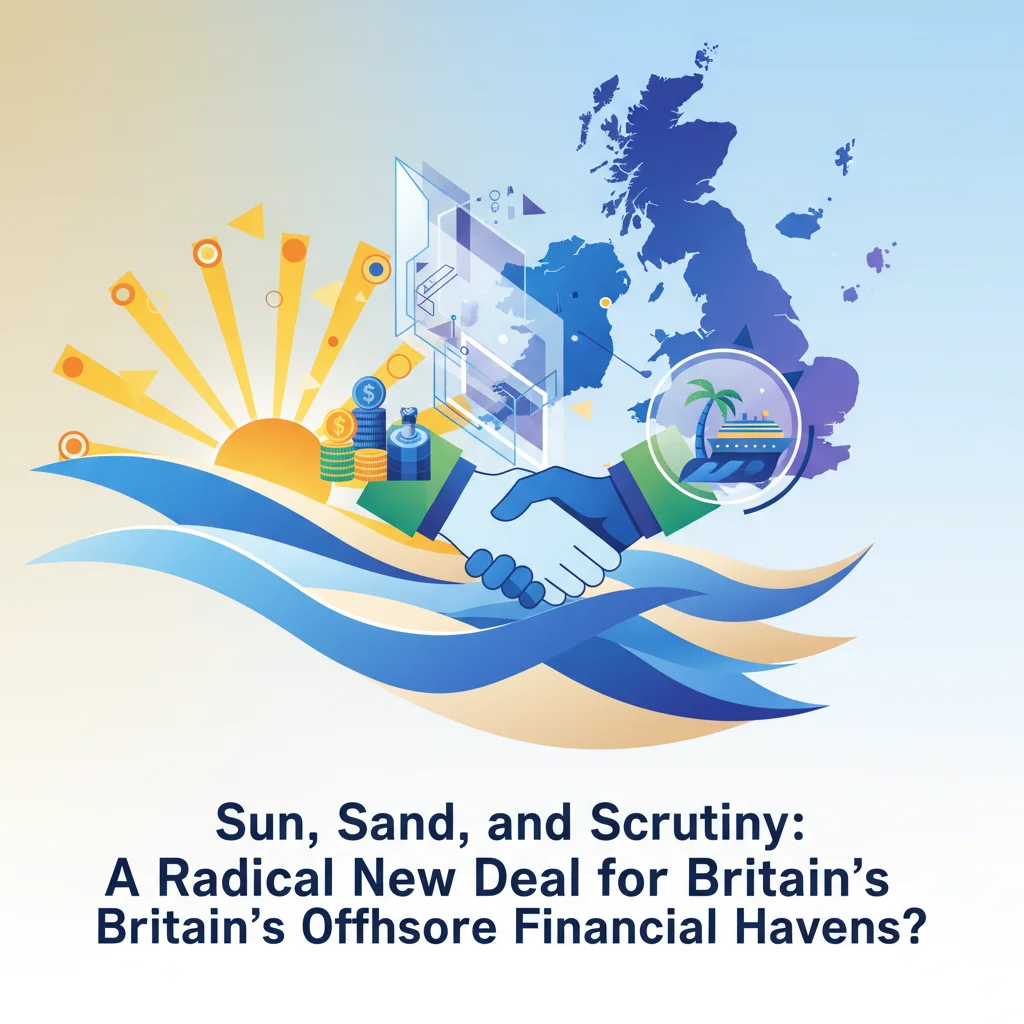
Sun, Sand, and Scrutiny: A Radical New Deal for Britain’s Offshore Financial Havens?
A Bold Proposal: Trading Financial Secrecy for Tourism
In the world of international finance, the phrase “offshore tax haven” often conjures images of sun-drenched islands, impenetrable banking secrecy, and a discreet home for the world’s vast, untraceable wealth. For decades, several of the UK’s Overseas Territories (OTs)—think the Cayman Islands, the British Virgin Islands (BVI), and Bermuda—have built their economies on the bedrock of financial services. But a seismic shift may be on the horizon. A new proposal, championed by veteran anti-corruption campaigner Dame Margaret Hodge, suggests a radical trade-off: in exchange for the UK government actively helping these territories develop robust, sustainable tourism industries, they must implement full public registers of beneficial ownership. This isn’t just a minor policy tweak; it’s a fundamental reimagining of their economic future.
The proposal, as outlined in a Financial Times report, presents a compelling “carrot” to accompany the “stick” of impending regulation. For years, the UK and international bodies have been pushing these jurisdictions towards greater transparency to combat money laundering, tax evasion, and the financing of illicit activities. The final deadline for these territories to establish public registers is fast approaching, and this proposal offers a constructive path forward—a way to cushion the economic blow by cultivating an alternative engine for growth. It’s a plan that sits at the complex intersection of global economics, national sovereignty, and the relentless march of financial technology.
The Double-Edged Sword of an Offshore Economy
To understand the gravity of this proposal, one must first appreciate the economic model it seeks to transform. Many of the UK’s Overseas Territories have become global powerhouses in the finance and banking sectors. Their low-tax regimes, stable legal systems based on English common law, and, historically, high degree of confidentiality have made them magnets for international investing and corporate structuring. This specialization has brought immense prosperity, creating high-paying jobs and funding public services without the need for income or corporate taxes in some cases.
However, this economic model is built on a foundation that is being steadily eroded by a global regulatory tsunami. The push for transparency, led by organizations like the OECD’s Global Forum on Transparency, has made financial secrecy a liability rather than an asset. The core demand is for “beneficial ownership” transparency—clarity on who ultimately owns and controls a company, not just the nominee directors or shell corporations listed on paper. A lack of this transparency is what allows illicit funds to be channeled through the global financial system, impacting everything from the stability of the stock market to the funding of criminal enterprises.
This table provides a snapshot of the economic reliance on financial services for some of the most prominent UK Overseas Territories:
| Territory | Primary Economic Driver | Contribution of Financial Services to GDP (Approx.) |
|---|---|---|
| Cayman Islands | Financial Services | Over 50% (source) |
| British Virgin Islands (BVI) | Financial Services & Tourism | Roughly 60% |
| Bermuda | International Business (Insurance/Reinsurance) | Around 25-30% |
| Gibraltar | Financial Services & Online Gaming | Approximately 30% |
As the data shows, a significant disruption to the financial services industry, which greater transparency might cause, could have profound consequences for the local economy of these territories. This is the very dilemma Hodge’s proposal aims to address.
The Yen's Shadow: Why the Bank of Japan's Next Move is Shaking the Crypto Market
Can Palm Trees Replace Paper Companies? The Tourism Pivot
The idea of transitioning from a finance-based to a tourism-based economy is alluring. It promises a more tangible, sustainable, and perhaps more equitable form of development. The UK’s support could manifest in various ways: funding for infrastructure projects like airports and sustainable resorts, global marketing campaigns, and expertise in developing eco-tourism and luxury travel niches. This would not only diversify the economy but also create a wider range of jobs beyond the highly specialized legal and accounting professions.
However, the path is fraught with challenges. The global tourism market is fiercely competitive. These territories would be competing with established Caribbean and Atlantic destinations that have spent decades building their brand and infrastructure. Furthermore, a high-end tourism economy requires a specific skill set, and a transition would necessitate significant investment in hospitality training and education. There is also the risk of replacing one form of economic dependency with another, leaving these islands vulnerable to global shocks like pandemics or economic downturns that hit the travel industry hard. The environmental impact of scaling up tourism on small, ecologically sensitive islands is another critical consideration that cannot be overlooked.
Implications for Global Investing and the Future of Finance
This proposed shift carries significant implications for investors, finance professionals, and the broader global economy. For decades, offshore entities have been a standard component of complex international trading and investment structures. The move towards public registers fundamentally changes the risk and due diligence calculus.
For legitimate investors, this increased transparency can be a net positive. It reduces counterparty risk and makes it easier to verify the integrity of business partners, potentially lowering the cost of due diligence. It helps level the playing field, ensuring that all players are abiding by the same set of rules and making it harder for competitors to use opaque structures to gain an unfair advantage. The long-term effect could be a more stable and trustworthy global financial system, which benefits the stock market and overall economic health.
However, for those who have utilized these jurisdictions for privacy (which is not always for nefarious purposes), this represents a major shift. It will force a re-evaluation of how and where assets are held and companies are domiciled. The world of finance is adapting quickly, with financial technology offering new tools for compliance and reporting, but the transition period will undoubtedly create friction and uncertainty in cross-border investing.
The Coiled Spring: Why Bitcoin Could Outshine Tech Stocks and Gold in the Next Market Rally
The Path Forward: A Collaborative Compromise?
The success of this grand bargain hinges on collaboration, not coercion. The Overseas Territories are not colonies; they are self-governing entities with their own democratically elected leaders who will, rightly, be protective of their economic sovereignty. A top-down mandate from London is likely to be met with fierce resistance. As the Tax Justice Network and other watchdog groups have pointed out, the pressure for these changes has been building for nearly a decade.
The proposal’s strength lies in its framing as a partnership. By offering tangible economic support, the UK government acknowledges the real-world consequences of its transparency demands and provides a viable alternative. The coming months will be critical. Negotiations will need to be handled with diplomatic sensitivity, focusing on mutual benefit rather than punitive action. It will require a detailed roadmap for tourism development, firm financial commitments from the UK, and a phased, manageable timeline for the implementation of public registers.
Ultimately, the conversation sparked by Dame Margaret Hodge’s proposal is about the future identity of offshore finance. Can these jurisdictions evolve from havens of secrecy into beacons of transparency and specialized, high-value services? The answer will not only determine the economic fate of these small islands but will also send ripples throughout the entire global financial ecosystem, shaping the future of investing, banking, and international economics for years to come.
Honduras on a Knife's Edge: Decoding the Economic Fallout of a Razor-Thin Election
Conclusion: A New Chapter for Offshore Finance
The proposal to link financial transparency with tourism development is one of the most creative solutions yet to a decade-long regulatory challenge. It attempts to reconcile the global demand for accountability with the economic realities of the UK’s Overseas Territories. While the transition from a finance-centric to a tourism-focused economy is a monumental undertaking fraught with risk, it also offers a path towards a more diversified and sustainable future. The world is watching to see if this bold quid pro quo can transform the idyllic beaches and boardrooms of Britain’s offshore territories, ushering in an unprecedented era of sun, sand, and total scrutiny.

Related Posts

Beyond the Greenland Gaffe: Decoding the EU’s Push for Economic Stability with the US
The £1.5 Billion Green Failure: A Case Study in Government Waste, Investment Risk, and the Future of ESG