AI vs. AI: The Invisible War for Your Next Tech Job
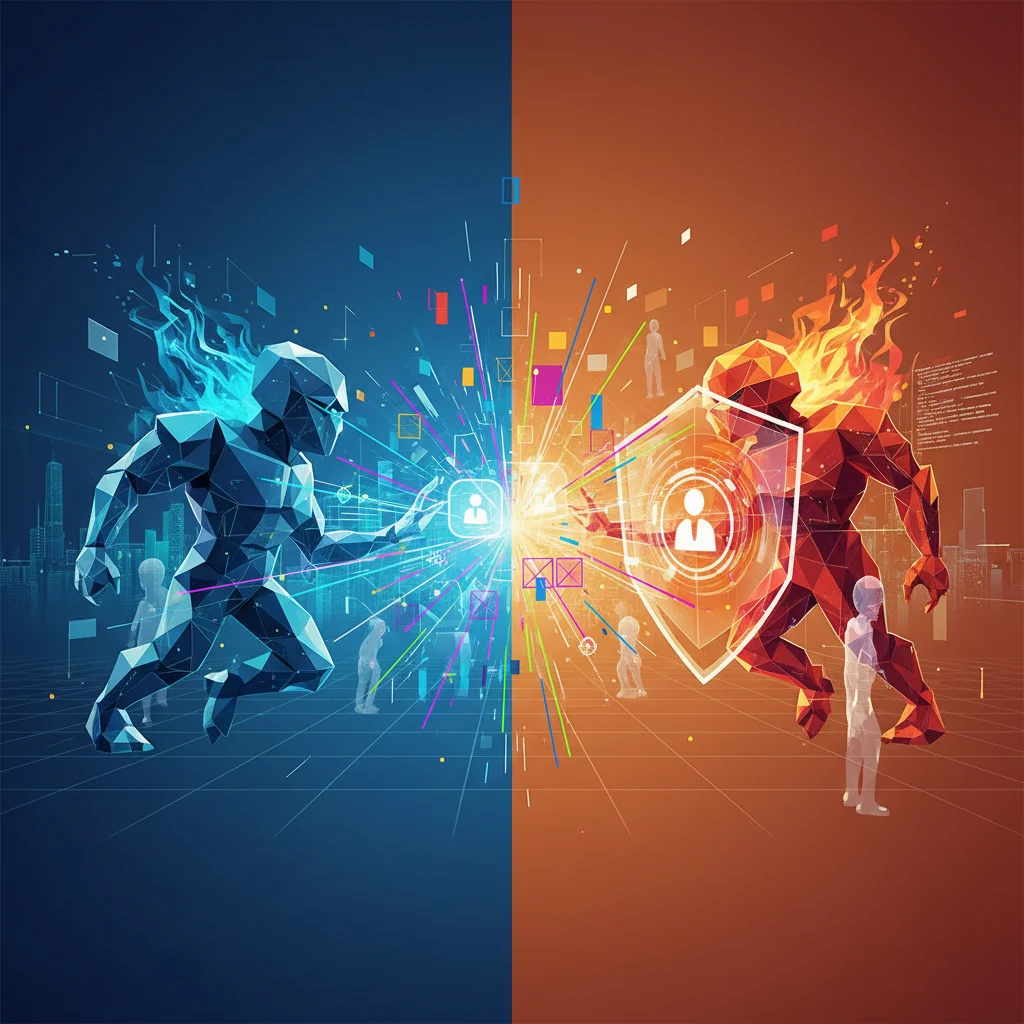
Remember the good old days of job hunting? You’d polish your resume, write a heartfelt cover letter, and send it off, hoping a human would see the passion and potential behind the paper. Fast forward to today, and the landscape has been completely transformed by artificial intelligence. You’re no longer just competing with other candidates; you’re navigating a complex digital battlefield where your AI-powered application tools are pitted against a company’s AI-powered filtering systems. It’s a silent, invisible war being waged in the cloud, and it’s fundamentally changing the nature of how we find work.
A recent BBC report perfectly captures this new reality, highlighting a phenomenon that HR tech expert Shori call a “race to the bottom.” On one side, jobseekers, armed with sophisticated SaaS tools, can now apply for hundreds, or even thousands, of jobs with a few clicks. On the other, employers, drowning in this digital deluge, are deploying their own AI gatekeepers to manage the flood. The result? A high-tech, high-volume, and often deeply impersonal tug-of-war that leaves many wondering if the human element has been lost for good.
In this deep dive, we’ll unpack this AI recruitment paradox. We’ll explore the tools driving this arms race, the profound implications for developers, startups, and tech professionals, and most importantly, we’ll discuss how we can break the cycle and build a smarter, more human-centric future for hiring.
The Seeker’s Gambit: AI as a Volume Machine
For any jobseeker, especially in the competitive tech industry, application fatigue is real. The process of tailoring resumes, writing cover letters, and filling out endless forms for each role is exhausting. This is where AI-powered application automation tools have emerged as a game-changer.
Consider the story of Alexander, a job hunter featured in the BBC article. Using an AI tool called Wonsulting, he was able to fire off applications for 1,000 different jobs. The platform automated the tedious process of filling in his details, allowing him to play a numbers game on a scale previously unimaginable. The outcome? Twenty interview requests. From his perspective, the AI was a massive success, turning a daunting task into a manageable, data-driven strategy.
These platforms leverage machine learning to:
- Auto-fill Applications: Parse a user’s resume and automatically populate standard application fields across various job portals.
- Keyword Optimization: Suggest tweaks to a resume to better align with the keywords it detects in a job description, aiming to please the algorithmic gatekeepers (the Applicant Tracking Systems, or ATS).
- Generate Cover Letters: Use generative AI to create tailored, if somewhat generic, cover letters for each specific role.
For a developer skilled in programming but less so in the art of self-marketing, this technology feels like a lifeline. It promises to level the playing field, allowing their qualifications to be seen by more potential employers. But this convenience comes at a cost, contributing to a system-wide tsunami of applications.
The Employer’s Shield: Drowning in Data, Saved by the Algorithm
Now, let’s look at the other side of the screen. Nolan Church, CEO of tech talent marketplace Continuum, shared a staggering statistic: he received 7,000 applications for a single role in just 24 hours. It’s physically impossible for any human, or even a team of humans, to meaningfully review that many candidates. This is the problem that AI-powered application tools have created, and it’s the problem that employers are now using more AI to solve.
Enter the modern Applicant Tracking System (ATS). These are no longer simple databases; they are sophisticated filtering engines that act as the first line of defense for recruiters. This software uses AI to:
- Parse and Rank Resumes: The system scans for specific keywords, skills, educational backgrounds, and years of experience, then scores and ranks candidates accordingly.
- Identify “Ideal” Profiles: Using machine learning models trained on the company’s past successful hires, the ATS can flag candidates who fit a predetermined pattern.
- Red-Flag Inconsistencies: Some advanced systems can check for inconsistencies across a candidate’s LinkedIn profile, resume, and application answers.
For a hiring manager at a fast-growing startup, this level of automation is essential to simply stay afloat. However, the reliance on these systems creates a new set of critical problems, from inherent bias to significant cybersecurity risks from fake, AI-generated candidate profiles designed to phish for information.
AI vs. Artist: The Jorja Smith Case and the Future of Musical Identity
The Vicious Cycle: A “Race to the Bottom” Visualized
The interaction between these two AI-driven forces creates a self-perpetuating, negative feedback loop. As one side escalates, the other is forced to respond in kind, pushing the human element further and further out of the picture. This is the “race to the bottom” in action.
Here’s a breakdown of this vicious cycle:
| Stage | Jobseeker Action (Powered by AI) | Employer Reaction (Powered by AI) | Outcome |
|---|---|---|---|
| 1. The Spark | A jobseeker uses an AI tool to apply for 200 jobs in an hour, hoping to increase their odds. | A recruiter sees their application inbox swell from 50 to 500 applicants for one role. | Application volume skyrockets. |
| 2. The Shield | N/A | The company implements a stricter AI filter (ATS) to automatically reject 95% of applicants based on rigid keyword matching. | The hiring process becomes more automated and less personal. |
| 3. The Countermeasure | Jobseekers adopt more advanced AI tools designed specifically to “beat the ATS” by stuffing resumes with keywords. | The AI filter is now flooded with “optimized” but often low-quality or mismatched applications. | Signal-to-noise ratio plummets. |
| 4. The Escalation | The sheer volume and lack of personalization lead to generic, low-effort applications becoming the norm. | Recruiters, trusting the AI filter, spend less time on individual resumes, potentially missing great candidates who don’t fit the mold. | Dehumanization and frustration for both sides. |
This cycle is detrimental to everyone. Talented developers with unconventional backgrounds get filtered out. Startups miss out on innovative thinkers who don’t check the right boxes. And the entire hiring ecosystem becomes less about connection and more about algorithmic compliance.
Beyond the Hype: Why HSBC’s Deal with AI Startup Mistral is a Tectonic Shift for Finance and Tech
Breaking the Cycle: The Future of Intelligent and Humane Hiring
The current trajectory is unsustainable. The solution isn’t to abandon artificial intelligence, but to evolve how we use it—shifting the focus from volume and filtering to quality and matching. This represents a massive opportunity for innovation, especially for entrepreneurs and developers in the HR tech space.
So, how do we build a better future? The next generation of hiring technology should prioritize genuine connection and skill validation.
Here’s a comparison of the old paradigm versus a more intelligent future:
| Feature | The Old AI Approach (Filtering) | The New AI Approach (Intelligent Matching) |
|---|---|---|
| Primary Goal | Reduce the number of applications to review. | Identify the best-fit candidates, regardless of application volume. |
| Core Technology | Keyword matching and pattern recognition based on past hires (risk of bias). | Skills-based analysis, psychometric matching, and portfolio evaluation. |
| Candidate Experience | Impersonal, frustrating, a “black box.” | Transparent, engaging, with feedback loops. |
| Outcome | A small, homogenous pool of “safe” candidates. | A diverse, high-potential pool of candidates with verified skills. |
Actionable Takeaways for the Tech Community
- For Developers & Tech Professionals: Your GitHub is your new resume. While you may still need to play the ATS game, focus your energy on building a strong, public portfolio of your programming work. Contribute to open-source projects. Write technical blogs. The best way to beat the filter is to create signals of value that exist outside the traditional application.
- For Startups & Entrepreneurs: This is your competitive advantage. While large corporations are stuck with rigid, filtering-based systems, you can build a hiring process that prioritizes human connection. Use technology for scheduling and communication, but lean on human judgment for evaluation. Look for the candidates the algorithms miss—they are often your most innovative hires.
– For HR Tech Innovators: The market is ripe for disruption. The next billion-dollar SaaS company in this space won’t be a better filter. It will be a platform that facilitates genuine skill validation, reduces bias through ethical AI design, and makes hiring more about capabilities and less about credentials.
Cosmic Rays vs. Code: Why 6,000 Airbus Jets Need a Software Patch and What It Teaches the Tech World
Conclusion: From Arms Race to Intelligent Alliance
The AI recruitment arms race is a classic example of technology creating problems as quickly as it solves them. The drive for efficiency has led us down a path of dehumanization, creating a frustrating experience for jobseekers and a high-risk, low-signal environment for employers. We are at a critical juncture where we can choose to continue escalating this invisible war or pivot towards a more intelligent alliance between humans and AI.
The future of work doesn’t have to be a battle of algorithm against algorithm. By focusing on tools that verify skills, reveal potential, and facilitate meaningful connections, we can leverage the power of AI not to build higher walls, but to build better bridges between talented individuals and the opportunities they deserve.
The real innovation won’t be in processing a million applications a minute, but in finding the perfect one.

Related Posts
From Wish Lists to Wall Street: How AI Gift-Finders Signal a New Economic Reality

Code Red in Tinseltown: Why the Netflix-Warner Deal is a Tech Story About AI, Automation, and the Future of Innovation