The Monroe Doctrine 2.0: What a US ‘Peace Through Strength’ Policy Means for the Global Economy
In a statement that echoed through the halls of Washington and across global trading desks, US Defence Secretary Pete Hegseth declared the Monroe Doctrine—a cornerstone of American foreign policy for two centuries—is “stronger than ever.” Coupled with a promise of “peace through strength,” this assertion signals a pivotal shift in how the United States views its role in the Western Hemisphere, with profound implications for the global economy, international trade, and investment strategies.
For investors, finance professionals, and business leaders, these are not mere political soundbites. They are signposts pointing toward a new era of geopolitical competition, supply chain realignment, and capital allocation. Understanding the historical context and modern application of this doctrine is now essential for navigating the complex interplay between policy, power, and the stock market.
From Historical Doctrine to Modern-Day Strategy
First articulated by President James Monroe in 1823, the Monroe Doctrine was initially a defensive policy designed to prevent European powers from further colonizing or interfering with the newly independent nations of Latin America. The core message was simple: the Western Hemisphere was the United States’ sphere of influence, and external meddling would not be tolerated. Over the decades, this doctrine evolved, most notably with the Roosevelt Corollary of 1904, which was used to justify US intervention in the region to protect its economic interests.
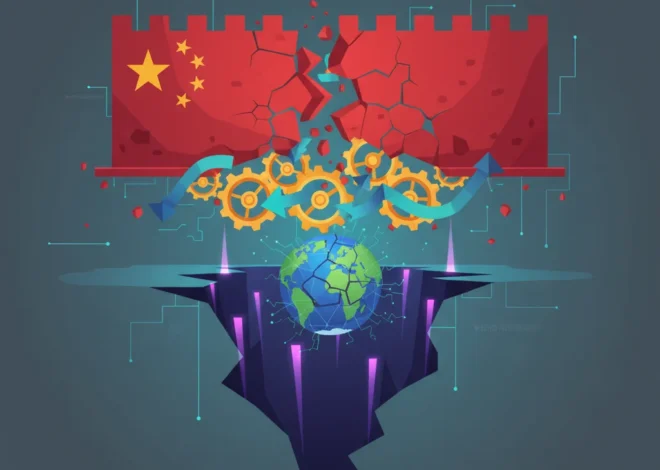
Today, the “European powers” of concern are not Spain or Great Britain. The revitalization of the Monroe Doctrine is a direct response to the growing economic and strategic influence of extra-hemispheric actors, most notably China. According to a report from the Council on Foreign Relations, trade between China and Latin America and the Caribbean (LAC) surged from $17 billion in 2002 to nearly $450 billion in 2021, with projections it will exceed $700 billion by 2035. This economic partnership extends far beyond simple trade.
China’s influence is cemented through its Belt and Road Initiative (BRI), which has funded critical infrastructure projects—ports, railways, and power grids—across the continent. This has given Beijing significant leverage over key trade routes and access to vital raw materials, from Chilean copper to the lithium found in the “Lithium Triangle” of Argentina, Bolivia, and Chile. Hegseth’s assertion of American military dominance is a clear signal that Washington intends to counter this influence and re-establish its primacy in a region it considers its own backyard (source).
The UK's Non-Dom Shake-Up: A High-Stakes Gamble for Britain's Economy
The Economic Battlefield: Trade, Technology, and Trading
A “stronger than ever” Monroe Doctrine is not just a military strategy; it’s an economic one. Its implementation will directly impact several key areas of the financial world, creating both risks and opportunities for savvy investors.
1. Supply Chain Realignment (Nearshoring)
The COVID-19 pandemic and rising US-China tensions have already exposed the vulnerabilities of long, complex supply chains. A renewed focus on the Western Hemisphere will accelerate the trend of “nearshoring”—moving manufacturing and sourcing from Asia to closer, more politically stable allies like Mexico, Costa Rica, and Colombia. This shift has massive implications for:
- Logistics and Industrial Real Estate: Companies specializing in cross-border logistics, warehousing, and industrial parks in Mexico and Central America stand to benefit.
- Manufacturing: US manufacturers in sectors like automotive, medical devices, and electronics may increase investment in regional production facilities.
- Raw Materials: Securing access to the region’s vast resources, especially critical minerals for EV batteries and electronics, will become a top priority.
2. Competition in Financial Technology (Fintech)
The battle for influence is increasingly being fought in the digital realm. China has been actively exporting its fintech platforms and making inroads with its Digital Yuan. A US counter-strategy would likely involve promoting American payment systems, digital banking solutions, and potentially even leveraging blockchain technology for secure and transparent supply chain management. This could create a boon for US fintech firms expanding into Latin American markets, which are ripe for digital disruption. The competition will be fierce, as Chinese tech giants and local startups are already well-entrenched.
3. Foreign Direct Investment (FDI) and Capital Markets
Hegseth’s statement can be interpreted as a security guarantee for US capital. The implicit message is that investments in the region will be protected by American strength. This could de-risk certain investments and encourage more FDI from the US and its allies. However, it also introduces heightened geopolitical risk. Countries caught in the middle of a US-China tug-of-war could face political instability, impacting their local stock market and currency valuations.
To illustrate the economic landscape that is prompting this policy shift, consider the changing trade dynamics in the region. The following table highlights the dramatic growth of China’s trade relationship with key Latin American economies compared to that of the United States.
| Country | Partner | 2001 Trade Volume | 2021 Trade Volume | 20-Year Growth |
|---|---|---|---|---|
| Brazil | United States | $30.1B | $70.5B | 134% |
| China | $2.3B | $135.4B | 5,787% | |
| Chile | United States | $8.8B | $29.1B | 230% |
| China | $2.5B | $57.6B | 2,204% | |
| Peru | United States | $4.2B | $17.9B | 326% |
| China | $0.7B | $31.1B | 4,342% |
Data synthesized from reports by the Observatory of Economic Complexity (OEC) and various national trade statistics. Figures are approximate and intended for illustrative purposes.
The Platinum Pivot: Why Hybrid Cars Are Creating a Golden Opportunity in an Overlooked Metal
Investment Implications: Navigating the New Geopolitical Reality
For those engaged in investing and trading, this renewed doctrine necessitates a recalibration of risk models. Here’s a sector-by-sector breakdown of potential impacts:
- Defense and Aerospace: A commitment to “peace through strength” directly benefits US defense contractors. Increased military presence, surveillance, and security partnerships in the region will likely lead to new contracts.
- Commodities and Mining: Expect a strategic push by the US to secure access to lithium, copper, silver, and other critical minerals. This could benefit US and allied mining companies operating in the region but may also lead to increased tensions with nations seeking to nationalize their resources.
- Technology and Cybersecurity: As the US seeks to counter Chinese tech influence (e.g., Huawei’s 5G networks), opportunities will arise for American and European firms specializing in telecommunications, data centers, and cybersecurity.
- Emerging Markets: Latin American ETFs and country-specific funds will become more volatile. Investors will need to differentiate between countries closely aligned with the US and those playing both sides or leaning toward China. The premium for political stability will increase significantly.
The core of this policy shift is about competition. It’s a recognition that economic interdependence with a strategic rival like China creates vulnerabilities that Washington is no longer willing to tolerate, especially in its immediate sphere of influence. The long-term success of this Monroe Doctrine 2.0 will depend on America’s ability to compete on the economic playing field, offering superior alternatives in trade, banking, and technology.
Beyond the Broken Glass: The Hidden Economic Shockwaves of a Local Business Break-In
Conclusion: A New Chapter for the Western Hemisphere
The declaration that the Monroe Doctrine is “stronger than ever” is more than a historical callback; it is a forward-looking statement of intent. It signals a fundamental reordering of US strategic priorities, placing the Western Hemisphere back at the center of its foreign policy and, by extension, its economic strategy. The era of benign neglect is over, replaced by an era of active competition.
For the financial community, this is a critical moment. The tectonic plates of global power are shifting, and the aftershocks will be felt across every asset class—from commodities and currencies to equities and bonds. The principles of economics dictate that capital will follow security and opportunity. By reasserting its influence, the United States aims to ensure that for the next century, that security and opportunity are best found in partnership with Washington. Investors and business leaders who understand and adapt to this new reality will be best positioned to navigate the challenges and seize the opportunities that lie ahead.