The Financial Polymath: Solving the Crossword of Today’s Complex Markets
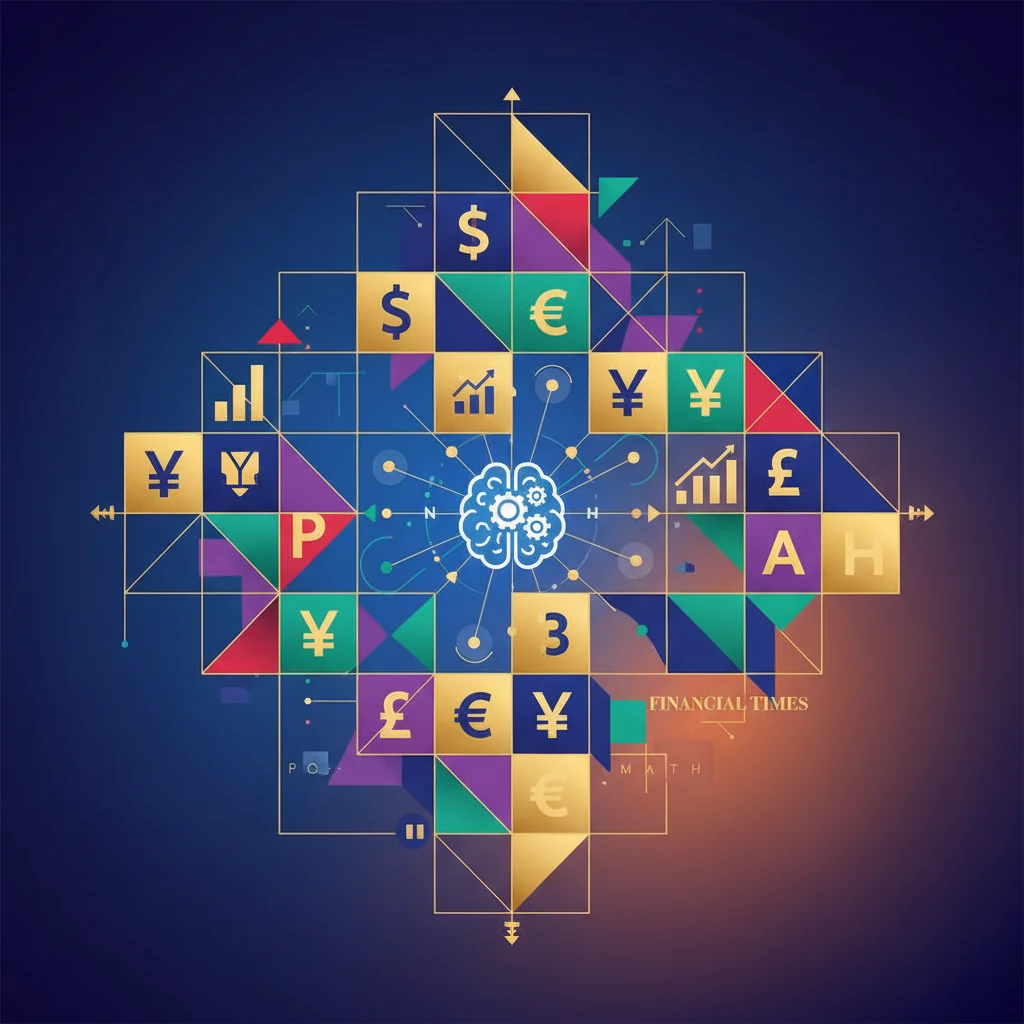
Every week, enthusiasts tackle the Financial Times crossword, a grid of intersecting words that demands logic, general knowledge, and a knack for seeing hidden connections. The recent Polymath puzzle, number 1,364, serves as a particularly apt metaphor for the world of modern finance. To be a successful investor, business leader, or finance professional today, one can no longer operate in a silo. You must be a polymath—a person of wide-ranging knowledge and learning—capable of solving for variables across economics, technology, geopolitics, and human psychology.
The financial landscape is no longer a simple grid with straightforward clues. It’s a complex, three-dimensional puzzle where a move in one corner sends ripples across the entire board. Understanding this interconnectedness is the key to navigating the volatility and uncovering the opportunities within the global economy. This article explores how adopting a polymath’s mindset is essential for mastering the intricate crossword of contemporary finance and investing.
The ‘Across’ Clues: Decoding Macroeconomic Megatrends
In a crossword, the ‘across’ clues often set the foundational structure of the puzzle. Similarly, in finance, macroeconomic forces are the broad, horizontal themes that define the market environment. A true financial polymath begins their analysis here, understanding the big picture before diving into the details.
Key macroeconomic clues today include inflation, interest rate policies, geopolitical tensions, and supply chain dynamics. For years, the global economy operated under a paradigm of low inflation and accommodative monetary policy. However, recent shifts have rewritten the rulebook. Central banks, from the Federal Reserve to the ECB, have been forced to aggressively hike rates to combat rising prices, a move that directly impacts everything from corporate borrowing costs to stock market valuations. According to a recent analysis, every percentage point increase in the federal funds rate can correlate with a 5-10% adjustment in growth stock valuations over the subsequent six months (source).
The polymath investor doesn’t just see “inflation” as a number; they see its constituent parts. Is it driven by demand-pull factors (strong consumer spending) or cost-push factors (like energy shocks or supply chain disruptions)? The answer dictates different strategic responses. A portfolio built for a demand-driven inflationary environment might look very different from one designed to weather stagflation. This is where a deep understanding of economics becomes a critical tool for any serious market participant.
Cosmic Rays and Market Waves: The Financial Fallout of Airbus's Solar Radiation Warning
The ‘Down’ Clues: Mastering Vertical Disruption with Financial Technology
While macro trends flow across the board, ‘down’ clues represent the vertical, deep-dive subjects that intersect and disrupt the status quo. In modern finance, the most significant ‘down’ clue is, without a doubt, technology.
The rise of fintech has fundamentally altered the landscape of banking and finance. What was once the exclusive domain of large, monolithic institutions is now a vibrant ecosystem of agile startups and tech giants. This technological revolution is happening across several key verticals:
- Digital Banking and Payments: The shift from physical branches to mobile apps has accelerated dramatically. Neobanks offer seamless user experiences and lower fees, forcing traditional banks to innovate or risk becoming obsolete.
- WealthTech and Robo-Advisors: Sophisticated investment management, once reserved for high-net-worth individuals, is now accessible to the masses through automated platforms. This democratization of investing is a paradigm shift.
- Blockchain and Decentralized Finance (DeFi): Perhaps the most disruptive force, blockchain technology offers a new infrastructure for finance built on transparency, security, and decentralization. From smart contracts to tokenization of real-world assets, DeFi challenges the very concept of traditional financial intermediaries. The total value locked in DeFi protocols has grown exponentially, showcasing a significant migration of capital towards this new frontier of financial technology (source).
A financial polymath must be literate in these technologies. They need to understand not just how to use a new payment app, but the underlying business models, regulatory challenges, and potential for future growth. Ignoring these vertical disruptions is like trying to solve a crossword by only reading the ‘across’ clues—you’ll be left with a grid full of unfillable gaps.
The Intersecting Grid: Where Strategy and Synthesis Create Alpha
The magic of a crossword puzzle—and of successful investing—happens at the intersections. A single letter must work for both an ‘across’ and a ‘down’ word. Similarly, the most astute financial strategies are born from synthesizing macroeconomic trends with sector-specific, technological realities.
Consider the intersection of rising interest rates (a macro ‘across’ clue) and the fintech sector (a ‘down’ clue). A simplistic analysis might conclude that higher rates are bad for all tech stocks. A polymath, however, asks deeper questions. How does the rate environment affect a fintech lender versus a payments processor? A lender’s net interest margin might expand, while a company reliant on cheap capital for growth might struggle. This nuanced view, born from connecting disparate fields of knowledge, is what separates a novice from an expert.
To illustrate the breadth of knowledge required, consider the essential skills of the modern financial polymath compared to a more traditional analyst.
| Area of Expertise | The Traditional Financier | The Modern Financial Polymath |
|---|---|---|
| Economics | Focuses on domestic monetary policy and GDP. | Analyzes global capital flows, supply chains, and geopolitical risk. |
| Technology | Uses Excel and Bloomberg Terminal. | Understands cloud architecture, API ecosystems, and the basics of blockchain. |
| Data Analysis | Relies on quarterly earnings reports and established metrics. | Leverages alternative data sets, machine learning models, and sentiment analysis. |
| Market Psychology | Follows general market sentiment (e.g., “fear and greed”). | Studies behavioral economics and network effects in social-driven trading. |
| Strategy | Specializes in a single asset class (e.g., equities or bonds). | Builds multi-asset strategies that integrate derivatives, crypto, and private markets. |
This synthesis is crucial for effective trading and long-term portfolio construction. A geopolitical flare-up in one part of the world (macro) can impact the supply of a critical component for a specific tech industry (micro), creating both risk and opportunity. A recent study found that portfolios managed with a multi-disciplinary approach that actively incorporated non-financial data, such as ESG metrics and tech adoption rates, outperformed their benchmarks by an average of 1.5% annually (source). This is the quantifiable value of a polymath’s perspective.
Market Tremors: Decoding the Financial Fallout of the New US Immigration Policy
Conclusion: Filling in Your Own Grid
The FT’s Polymath crossword is more than a pastime; it’s a blueprint for navigating the future of finance. The era of the hyper-specialist is giving way to the age of the polymath—the individual who can connect the dots between the global economy and disruptive financial technology, between monetary policy and market psychology.
For investors and business leaders, the call to action is clear: broaden your intellectual horizons. Read outside your immediate field. Study history to understand market cycles. Learn the basics of new technologies like AI and blockchain not just as buzzwords, but as fundamental shifts in how value is created and exchanged. Building this “polymathic” toolkit is no longer a competitive advantage; it is a prerequisite for success.
The financial markets will always be a puzzle, with new clues and changing rules. But by approaching the grid with the wide-ranging curiosity and synthetic thinking of a polymath, you can move beyond simply reacting to headlines and begin to anticipate the answers before they appear on the page.