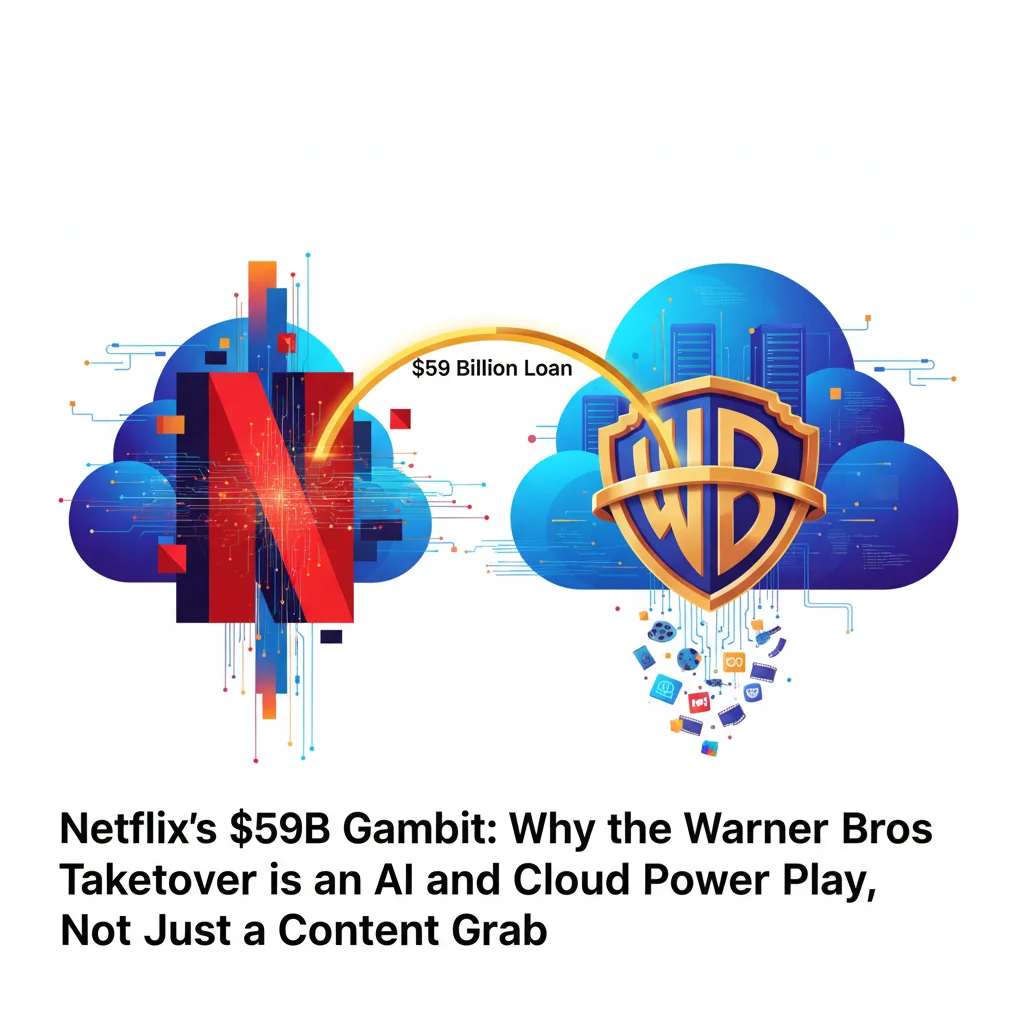
Netflix’s $59B Gambit: Why the Warner Bros Takeover is an AI and Cloud Power Play, Not Just a Content Grab
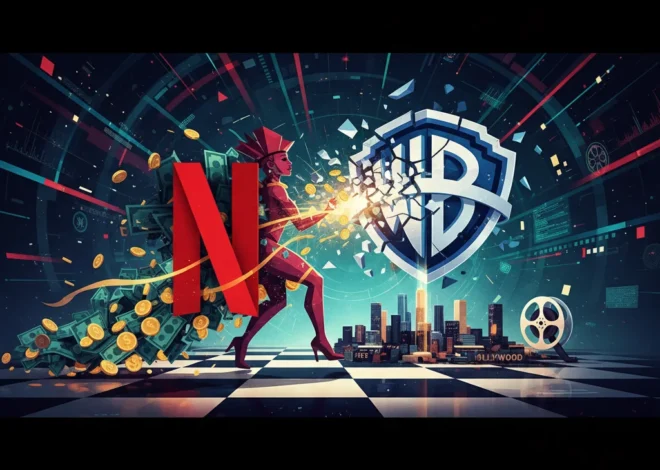
In a move that sent shockwaves through both Hollywood and Silicon Valley, Netflix has embarked on its most audacious chapter yet. The streaming behemoth is securing a colossal $59 billion loan, spearheaded by Wells Fargo, to finance a full-scale takeover of Warner Bros. This isn’t just another merger; it’s a tectonic shift signaling the final convergence of legacy media and big tech. While the headlines focus on Batman meeting Stranger Things, the real story lies deeper—in the code, the cloud, and the algorithms.
This acquisition is far more than a simple content library expansion. It’s a strategic move to create an unassailable moat built on data, powered by artificial intelligence, and scaled on a global cloud infrastructure. For developers, entrepreneurs, and tech professionals, this deal is a living case study in the future of media, where software and machine learning are the lead actors, and content is the script they perform.
Let’s break down the layers of this mega-deal, from the financial engineering to the technological integrations, and explore why this is Netflix’s ultimate bet on a future dominated by AI-driven entertainment.
The King of Content Meets the Kingdom of Code
On the surface, the logic is simple. Netflix, the pioneer of streaming, is acquiring Warner Bros., a century-old titan of storytelling. The sheer scale of the intellectual property (IP) involved is staggering. We’re talking about combining the worlds of The Witcher and The Crown with the DC Universe, Harry Potter, Game of Thrones, and the entire HBO catalog.
This instantly solves one of Netflix’s biggest challenges: an over-reliance on a constantly churning library of original content. Owning these evergreen franchises provides a stable, permanent foundation that reduces churn and provides endless opportunities for spin-offs, reboots, and new adaptations.
But to see this as just an IP grab is to miss the forest for the trees. The true value is unlocked when you apply Netflix’s technological prowess to Warner’s vast and beloved universe. This is where the integration of advanced software, cloud architecture, and AI becomes the central plot point.
Here’s a snapshot of the two giants before this historic merger:
| Metric | Netflix | Warner Bros. |
|---|---|---|
| Core Business | Streaming Subscription (SaaS) | Film & TV Production, Cable Networks, Publishing |
| Key Strength | Global Distribution, AI-Powered Personalization | Iconic, Multi-Generational IP Portfolio |
| Tech Stack | Cloud-Native, Microservices Architecture (AWS) | Legacy On-Premise & Hybrid Cloud Systems |
| Primary Asset | User Data & Recommendation Engine | Content Library (DC, Harry Potter, HBO) |
| Innovation Focus | Machine Learning, User Experience Programming | Theatrical Experiences, Franchise Building |
The $59 Billion Question: A Bet on Technological Synergy
The financing itself, a $59 billion debt facility, is a testament to the financial world’s confidence in this tech-centric vision. By using debt instead of stock, Netflix avoids diluting its ownership, signaling a strong belief that the future cash flows from this combined entity will far outweigh the interest payments. For startups and entrepreneurs, this is a masterclass in leveraged growth, albeit on a scale few can imagine.
But where does that confidence come from? It comes from the promise of synergy powered by technology.
1. AI and Machine Learning: The New Creative Executive
Netflix’s recommendation algorithm is its crown jewel. It’s a sophisticated machine learning system that analyzes viewing habits to personalize the user experience and inform content acquisition. Now, imagine feeding that AI with decades of data from Warner’s library. The possibilities are transformative:
- Hyper-Personalized Universes: The algorithm won’t just recommend The Batman. It will know which viewers prefer gritty detective stories and which prefer high-octane action, personalizing trailers and artwork to appeal to each segment. It could even suggest specific viewing orders for the sprawling DC universe based on a user’s taste.
- Predictive Greenlighting: By analyzing what elements of Harry Potter or Lord of the Rings resonate most deeply with specific demographics, Netflix’s AI can guide the development of new spin-offs with a much higher probability of success. This data-driven approach to creativity is a game-changer.
- AI-Assisted Production: From using AI to analyze scripts for pacing issues to generating pre-visualizations for complex CGI scenes, the integration of artificial intelligence into the production pipeline can streamline processes and reduce costs—a crucial factor when managing such a vast content slate.
This isn’t just about showing you the right thumbnail. It’s about creating a feedback loop where user data continuously informs creative and financial decisions, a level of integration legacy studios have never achieved. AI vs. Antitrust: Why Getty's Standoff with Regulators is a Warning for All of Tech
2. Cloud and SaaS: The Architectural Challenge
One of the biggest undertakings will be migrating Warner’s massive content archive and production workflows to a unified, cloud-native infrastructure. Netflix is a pioneer in using the public cloud (primarily AWS) to deliver streaming at a global scale. Integrating Warner’s assets will be a monumental task for software engineers and cloud architects.
This involves more than just storage. It requires building a sophisticated Software-as-a-Service (SaaS) platform for internal production teams. This platform will handle everything from digital asset management and collaborative editing to automated localization and royalty tracking. This “studio-in-the-cloud” concept is the future of media production, and this acquisition gives Netflix the scale and incentive to perfect it.
3. Automation and Programming: Efficiency at Scale
To manage a combined entity of this size, automation is not a luxury; it’s a necessity. The programming challenges are immense. Teams will need to build robust APIs to connect disparate systems, automate the ingestion and processing of thousands of film and television assets, and create streamlined workflows that span continents. This is a software problem at its core, requiring innovation in media supply chain management and process automation to realize the deal’s financial potential.
Cybersecurity: Protecting the Crown Jewels
With great IP comes great responsibility—and an enormous target for cybercriminals. The newly formed company will house the digital keys to some of the most valuable cultural assets on the planet. A leak of a new Batman film or a season finale of an HBO show could cost hundreds of millions in lost revenue and brand damage.
The cybersecurity challenge is twofold. First, securing the vast cloud infrastructure against intrusion. Second, protecting the sprawling production pipeline, which involves thousands of third-party vendors, artists, and production houses. This will require a massive investment in a zero-trust security architecture, advanced threat detection powered by—you guessed it—AI, and a rigorous approach to supply chain security. This merger instantly creates one of the most critical cybersecurity roles in the entire corporate world. India's Fintech Tsunami: Why Pine Labs' Chief Says It's Already Beaten China
What This Means for the Rest of Us
This landmark deal isn’t just an internal power play; its ripples will be felt across the tech and media industries.
- For Developers and Tech Professionals: The demand for engineers with skills in media tech—video encoding, cloud architecture, data science, machine learning, and cybersecurity—will skyrocket. The new Netflix will be one of the most complex and exciting software engineering environments in the world.
- For Startups and Entrepreneurs: When giants merge, they create gaps in the market. This creates opportunities for startups to build niche streaming services focused on specific genres or communities. There will also be a huge demand for B2B SaaS tools that help media companies manage their workflows, analyze data, or secure their content. Innovation will flourish in the spaces the new titan ignores.
- For the Future of Entertainment: We are heading towards a future of fewer, larger, all-encompassing entertainment platforms. These platforms will know more about our viewing habits than ever before, using that data to create a never-ending stream of personalized content. The upside is unparalleled convenience and choice. The potential downside is a homogenization of content as AI optimizes for mass engagement over risky, avant-garde art.
The 10,000-Year Clock: What Jeff Bezos's Epic Project Teaches Us About Building Software That Lasts
The Final Scene: A New Kind of Giant is Born
The Netflix-Warner Bros. takeover, financed by one of the largest debt deals of its kind (source), is the definitive statement that the streaming wars are entering their empire-building phase. It’s a declaration that the future of media belongs to companies that can master both content and code.
This isn’t just a media company buying another media company. It’s a technology company absorbing a century of storytelling to fuel its global AI-powered platform. It’s a story of finance, culture, and, above all, the relentless march of software and data in reshaping one of the world’s most influential industries. The curtain is rising on a new era, and Netflix has just cast itself in the leading role.

Related Posts
Bezos vs. Musk: The Final Frontier is the Cloud, and the Battle for Global Connectivity is On
Beyond the Balance Sheet: The Air India Crash Allegations and a Sobering Lesson in Investment Risk