The Affordability Paradox: Is the US Cost of Living Crisis a “Hoax” or a Harsh Reality?
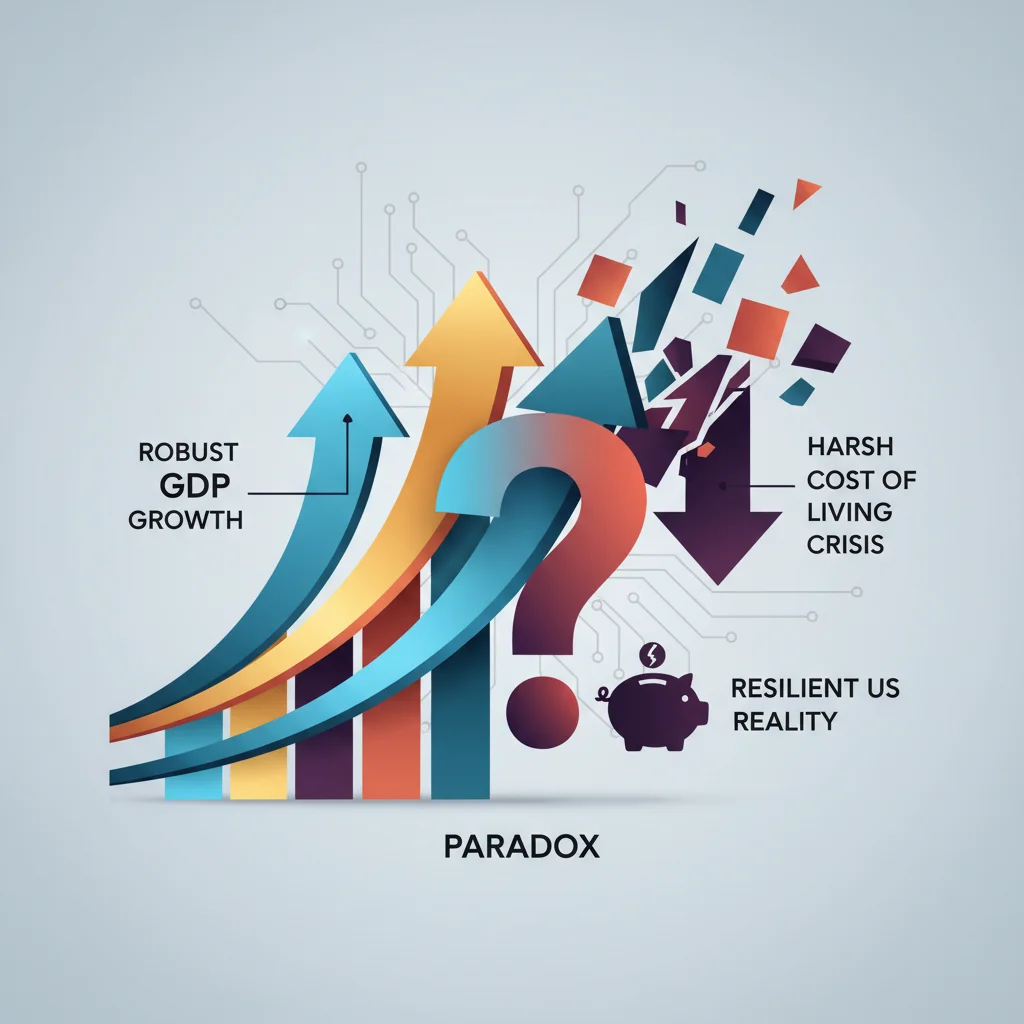
In the complex theater of modern economics, perception often battles with statistics for the leading role. On one side, we have macroeconomic data points to a resilient US economy: robust GDP growth, historically low unemployment, and a stock market that has flirted with all-time highs. On the other, a persistent and palpable sense of frustration from the general public, who see their grocery bills, rent, and insurance premiums continuing to climb. This stark disconnect was recently thrown into the spotlight when former President Donald Trump declared the narrative of a US affordability crisis to be a “hoax”.
This statement ignites a critical debate that goes far beyond partisan politics. It forces us, as investors, finance professionals, and business leaders, to ask a fundamental question: Are we misinterpreting the economic signals, or is the data failing to capture the lived experience of millions? This post will dissect this “affordability paradox,” moving beyond the headlines to explore the underlying economic realities, the psychology of inflation, and the profound implications for investing, financial markets, and the future of the American economy.
The Core of the Conflict: Inflation vs. Price Levels
To understand the disconnect, one must first grasp the crucial difference between the rate of inflation and the cumulative price level. This distinction is at the heart of the entire debate and is a concept every student of economics must master.
The Biden administration and many economists point to the Consumer Price Index (CPI), which has fallen significantly from its peak of over 9% in mid-2022 to a more manageable range. This is a positive development for the economy, indicating that the frantic pace of price increases has slowed. However, for the average consumer, this statistical victory feels hollow. Why? Because a lower inflation rate does not mean prices are decreasing; it simply means they are increasing at a slower pace. The mountain of price hikes from 2021 and 2022 hasn’t disappeared; we’ve just stopped climbing it as quickly.
Imagine driving a car at 100 mph and then slowing down to 30 mph. You have decelerated, but you are still miles away from where you started. The cumulative price increases over the past few years have permanently reset the cost basis for everyday life. The salary that felt comfortable in 2019 now feels stretched thin, even if it has seen nominal increases.
To put this in perspective, let’s examine the real-world impact on key household expenses. The data below illustrates the substantial increase in the cost of essential goods and services, using the Consumer Price Index data from the U.S. Bureau of Labor Statistics.
Change in Average Prices for Key Consumer Items (January 2020 – January 2024)
| Category | Approximate Price Increase | Impact on Households |
|---|---|---|
| Groceries (Food at Home) | ~25% | Direct, non-discretionary impact on every family’s budget. |
| Gasoline (All Types) | ~40% | Affects commuting costs, shipping, and the price of nearly all goods. |
| Electricity | ~28% | A fundamental utility cost that has risen significantly faster than historical averages. |
| Rent of Primary Residence | ~22% | One of the largest and stickiest expenses, squeezing household disposable income. |
| Car Insurance | ~45% | A dramatic surge driven by higher repair costs and vehicle values, impacting most working adults. |
This table makes the public’s frustration tangible. While wage growth has been strong, for many it has not been enough to offset the double-digit increases across such a broad and essential basket of goods. This is the harsh reality that political rhetoric, from either side, cannot easily dismiss. The “affordability crisis” is a story written in household budgets, not just in economic abstracts.
Global Tremors: Decoding Market Signals from Hong Kong's Tragedy to a UK Tax Overhaul
Market and Investing Implications in a Divided Economy
This chasm between statistical economic health and public sentiment has significant consequences for finance, banking, and investing strategies. A confused or pessimistic consumer is a cautious consumer, and consumer spending accounts for nearly 70% of the U.S. economy. Here’s how professionals should be thinking about this environment:
1. The Federal Reserve’s Dilemma
The persistent feeling of high costs, driven by the elevated price levels, keeps inflation expectations anchored higher than the Fed would like. This makes the central bank’s job of steering the economy toward a “soft landing” incredibly difficult. If they cut interest rates too soon to stimulate growth, they risk reigniting inflation. If they hold rates too high for too long, they could choke off the economic resilience we’ve seen and trigger a recession. Investors in the trading and banking sectors must watch consumer sentiment indices as closely as they watch the CPI, as public mood will heavily influence the Fed’s trajectory.
2. Sector-Specific Stock Market Performance
An environment of financial strain creates clear winners and losers in the stock market.
- Consumer Staples (e.g., Procter & Gamble, Walmart): These companies, which sell essential goods, tend to perform well as consumers cut back on discretionary spending but still need to buy food and household products.
- Consumer Discretionary (e.g., luxury goods, travel, high-end restaurants): This sector is more vulnerable. While high-income earners have remained resilient, the broad middle class feeling the pinch is more likely to pull back on vacations, new cars, and expensive gadgets.
- Financial Technology (Fintech) and Banking: The “buy now, pay later” (BNPL) segment of fintech may see increased usage as consumers stretch their budgets. However, traditional banking may face headwinds from higher delinquency rates on credit cards and auto loans as household budgets are squeezed. According to the New York Fed, credit card delinquencies have been steadily rising, a key indicator of consumer stress.
The Billion-Dollar Comment: How One Executive's Words Put Campbell's Brand and Stock on the Line
3. The Role of Political Rhetoric in Market Volatility
Calling the affordability crisis a “hoax” is not just a political statement; it’s a market-moving event. Such rhetoric injects uncertainty into the economic outlook. Will the next administration prioritize fiscal stimulus or austerity? Will trade policies change? This uncertainty increases market volatility, making long-term financial planning more challenging for both corporations and individual investors. The upcoming election cycle means that market participants must price in a higher degree of political risk, analyzing how different economic philosophies could impact everything from taxation to regulation.
Beyond the Domestic Debate: A Global Context
It is crucial to note that the United States is not an island. The inflationary pressures of the last few years were a global phenomenon, sparked by post-pandemic supply chain disruptions, shifts in consumer demand, and geopolitical events. Many developed nations in Europe and elsewhere have experienced similar, and in some cases more severe, cost of living crises. However, the unique structure of the U.S. economy—with its deep reliance on consumer spending and a more flexible labor market—makes the social and political fallout here particularly acute.
Furthermore, the long-term solutions to affordability are complex and multifaceted. They involve everything from housing policy and energy independence to technological innovation. Advancements in financial technology and even decentralized systems built on blockchain could one day offer new efficiencies, but these are not short-term fixes for today’s grocery bill. The immediate path forward for the economy remains dependent on the delicate dance between Federal Reserve policy, fiscal discipline, and, critically, the restoration of consumer confidence.
The Millennial & Gen Z Budget: A Deep Dive into the 9 Ways Fiscal Policy is Reshaping Young Finances
Conclusion: Navigating the Gap Between Data and Reality
So, is the affordability crisis a “hoax”? The data suggests it is not. While the term may be politically charged, it accurately describes the financial pressure millions of households are experiencing due to a significant and rapid reset of price levels. The disconnect is not a fabrication; it is a direct consequence of focusing on the moderating rate of change while ignoring the painfully high plateau on which prices now sit.
For those in finance, economics, and business, the lesson is clear: headline data is only part of the story. The sentiment, psychology, and real-world experiences of consumers are powerful economic forces. Understanding the nuances of the affordability paradox is no longer just a matter of academic debate—it is essential for prudent investing, effective policymaking, and strategic business planning in a world where perception and reality are locked in a complex and consequential dance.

Related Posts
UK’s Fiscal Surprise: Decoding the December Dip in Government Borrowing and What It Means for Investors
UK’s Unexpected Fiscal Breather: Decoding the December Borrowing Drop and Its Impact on the Economy
