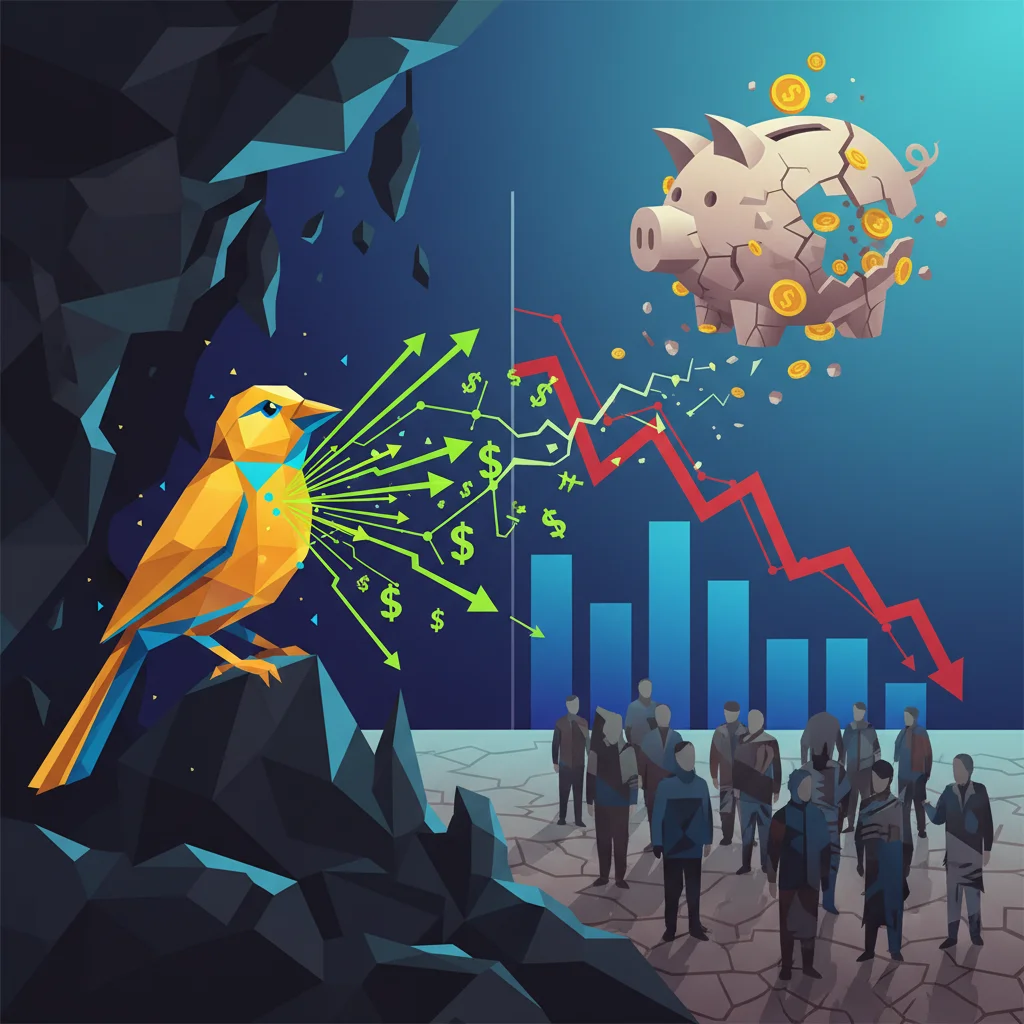
The Canary in the Coal Mine: Why Soaring Homelessness is a Critical Red Flag for the Economy and Investors
In the complex world of finance and investing, professionals are trained to parse a myriad of data points—from stock market fluctuations and GDP figures to inflation rates and central banking policies. We build sophisticated models to predict economic trends and manage risk. Yet, one of the most potent and visceral indicators of an economy’s health is often overlooked, relegated to the realm of social commentary rather than rigorous financial analysis: the number of people sleeping on our streets.
A recent report has highlighted what it calls “staggering” numbers of people being pushed into homelessness, driven largely by the persistent cost of living crisis. While this is a profound human tragedy, for those in finance, business, and investing, it should also serve as a critical, flashing red light on the economic dashboard. This isn’t just a social issue; it’s a lagging indicator of deep-seated economic instability and a leading indicator of future market headwinds. Understanding the financial mechanics behind this crisis is not only a matter of corporate responsibility but a crucial component of forward-looking economic analysis and risk management.
Deconstructing the Crisis: The Economic Forces at Play
The term “cost of living crisis” has become ubiquitous, but for a financial professional, it’s essential to dissect its components to understand the systemic pressures at work. This is not a single-factor problem but a perfect storm of macroeconomic trends that have eroded the financial stability of the most vulnerable households, pushing them over the precipice.
Inflation, Wages, and the Erosion of Purchasing Power
At its core, the crisis is a story of a widening chasm between income and expenses. While headline inflation may be moderating in some economies, the cumulative effect of the past few years has been devastating for low- and middle-income households. Wages have, for many, failed to keep pace with the sharp rise in essential goods and services. This isn’t just an abstract concept from economics textbooks; it has tangible consequences. When a family’s budget is stretched to its breaking point, there is zero margin for error—a single unexpected car repair, medical bill, or rent increase can be the catalyst for a spiral into debt and, ultimately, homelessness.
The following table illustrates the conceptual gap that many households are facing, where essential costs outpace income growth, creating a deficit that erodes savings and financial security.
| Economic Indicator | Typical Trend in a High-Pressure Economy | Impact on Household Finances |
|---|---|---|
| Consumer Price Index (CPI) – Essentials (Food, Energy) | High Growth (+8-10%) | Non-discretionary spending consumes a larger portion of income. |
| Average Wage Growth | Moderate Growth (+4-5%) | Real wages (adjusted for inflation) are declining. |
| Housing/Rental Costs | High Growth (+10-15%) | The single largest expense becomes unsustainable, leading to housing insecurity. |
| Household Savings Rate | Declining | The financial buffer to absorb shocks disappears. |
Monetary Policy and the Housing Market
The policies enacted by central banks to combat inflation have had profound, and sometimes paradoxical, effects. Aggressive interest rate hikes, while necessary to cool an overheating economy, have significantly increased the cost of borrowing. This directly impacts mortgage payments for homeowners and has a knock-on effect in the rental market, as landlords pass on their own increased financing costs. For decades, real estate has been a cornerstone of investing, but its transformation into a primary vehicle for speculative investment has also priced out vast segments of the population. The data shows that as housing affordability plummets, rates of homelessness invariably rise (source). This dynamic creates a precarious situation not only for individuals but also for the banking sector, which faces increased risk of defaults on both residential and commercial real estate loans.
The Ripple Effect: From Main Street to Wall Street
It is a dangerous mistake for the investment community to view rising homelessness as a contained social issue. The economic reverberations are significant and impact everything from corporate earnings to long-term market stability.
Consumer Demand and Corporate Earnings
An increasing number of people falling out of the formal economy translates directly to a reduction in aggregate demand. These are individuals who are no longer consumers of non-essential goods and services. For publicly traded companies in the retail, hospitality, and consumer discretionary sectors, a shrinking customer base at the lower end of the income spectrum will inevitably impact revenue and growth forecasts. The stock market, in the long run, is a reflection of corporate earnings, and a society with a growing underclass is a society with a capped potential for consumption-driven growth.
Systemic Risk and Public Finance
Beyond consumer spending, rising homelessness places an immense strain on public resources. Increased demand for emergency shelters, healthcare, and social support services requires significant government expenditure. This can lead to higher taxes, budget deficits, or the reallocation of funds away from other critical areas like infrastructure and education—investments that are vital for long-term economic productivity. For bond investors and those analyzing sovereign risk, the fiscal health of municipalities and nations is directly threatened by a failure to manage this social and economic challenge. The charities and public services stepping in are often overwhelmed, signaling a systemic failure that private and public sectors must address.
EU vs. China: A New Economic Iron Curtain? What Investors Need to Know
The Investor’s Lens: Navigating Risk and Uncovering Opportunity
For the savvy investor, this grim reality presents both significant risks to mitigate and new avenues for impactful and potentially profitable investment.
ESG and the Rise of Social Impact Investing
The ‘S’ in ESG (Environmental, Social, and Governance) investing is rapidly moving from a peripheral concern to a core component of risk assessment. Companies that ignore the social fabric in which they operate face reputational damage, regulatory scrutiny, and a less stable operating environment. Conversely, there is a growing opportunity in “impact investing”—channeling capital towards solutions. This includes:
- Affordable Housing Funds & REITs: Investing in the development and management of affordable housing units.
- Social Bonds: Municipal or corporate bonds issued specifically to fund projects with positive social outcomes, such as homelessness prevention programs.
- Venture Capital in “Poverty Tech”: Funding startups that create technologies to improve access to services, employment, and financial stability for low-income populations.
These strategies are no longer just philanthropy; they are becoming a sophisticated part of the modern investment landscape, premised on the idea that sustainable financial returns are intrinsically linked to a stable and equitable society.
Financial Technology: A Double-Edged Sword or a Path to Inclusion?
The world of financial technology, or fintech, offers powerful tools that can either exacerbate or alleviate the pressures leading to homelessness. Financial exclusion is a key accelerator of this crisis. Without access to fair and affordable banking, credit, or insurance, individuals cannot build savings, manage financial shocks, or escape predatory lending cycles.
This is where innovative financial technology can play a transformative role.
- Neobanks and Digital Banking: Offering low-fee or no-fee bank accounts accessible via a smartphone can provide a crucial first step into the formal financial system for the unbanked or underbanked.
- Alternative Credit Scoring: Fintech firms are developing models that use alternative data (like utility payments) to assess creditworthiness, opening up access to responsible credit for those ignored by traditional banking.
- Microsavings and Investment Platforms: Tools that enable people to save or invest very small amounts can help build a financial cushion over time.
Even more advanced technologies like blockchain are being explored for creating secure digital identities—a major barrier for the homeless in accessing services—or for ensuring transparent and efficient distribution of aid from charities and government agencies. The challenge for the fintech industry is to focus its immense innovative power not just on high-frequency trading algorithms or new payment apps for the affluent, but on building the inclusive financial architecture a healthy economy requires.
The High-Stakes Chess Game: Decoding the Global Scramble for a Ukraine Peace Deal
Conclusion: A Call for a Broader Economic Perspective
The “staggering” increase in people sleeping rough is more than a headline; it’s a data point reflecting the fractures in our economic foundation. For those in finance, economics, and business leadership, it’s time to broaden our definition of a “key economic indicator.” The stability of the stock market is inextricably linked to the stability of our communities.
Ignoring the human cost of economic policy and market dynamics is not only a moral failure but a strategic one. This crisis is a powerful signal of declining consumer health, rising systemic risk, and an urgent need for new models of growth. By analyzing these trends, investors can better protect their portfolios, business leaders can build more resilient companies, and innovators in financial technology can direct their efforts toward creating a more inclusive and, ultimately, more prosperous economy for all.

Related Posts
UK’s Fiscal Surprise: Decoding the December Dip in Government Borrowing and What It Means for Investors
UK’s Unexpected Fiscal Breather: Decoding the December Borrowing Drop and Its Impact on the Economy
