From LOL to Ledger: The Sobering End of Finance’s Joke Era
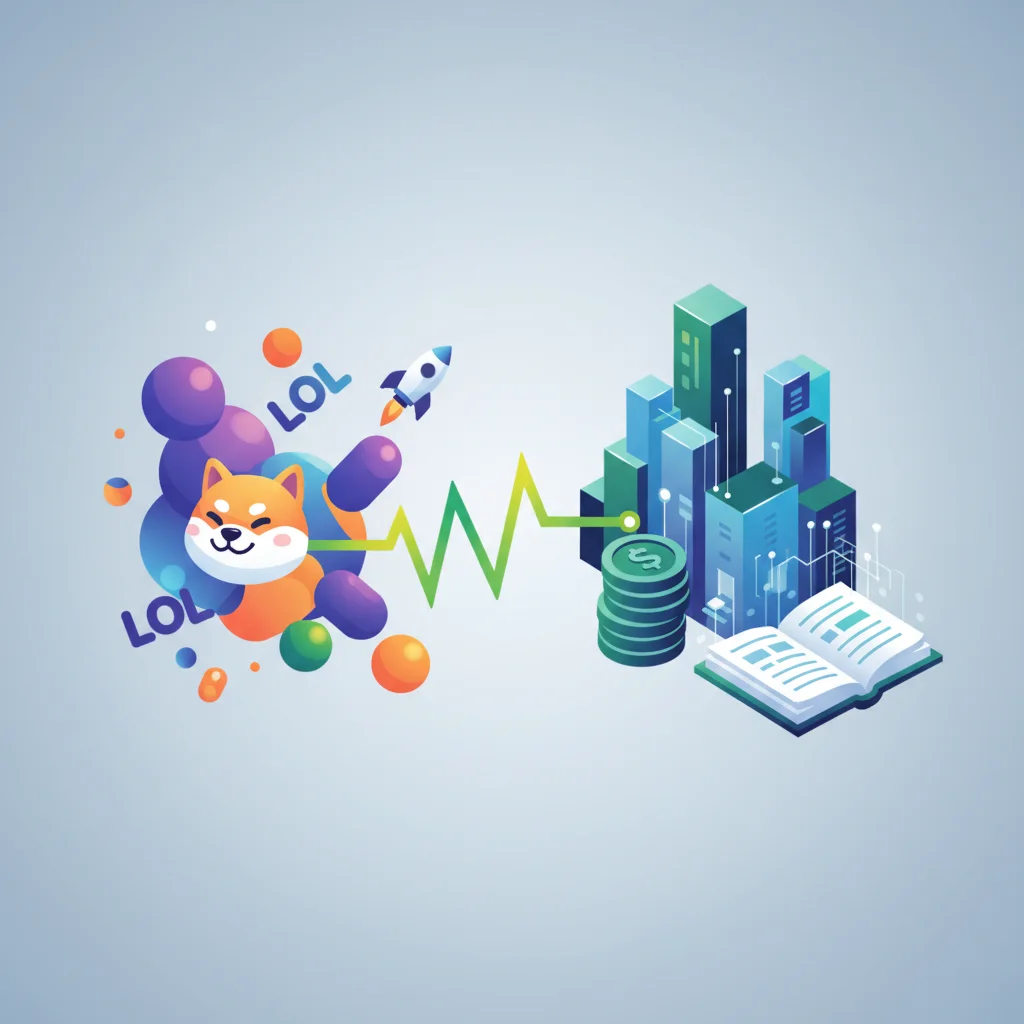
There was a moment, not so long ago, when the worlds of high finance and internet absurdity collided with spectacular force. It was an era where a joke cryptocurrency featuring a Shiba Inu could achieve a market capitalization larger than established blue-chip companies, and a single tweet could send asset prices on a rollercoaster ride. Running a global superpower and launching a memecoin seemed to be governed by the same chaotic, hilarious logic. As Robert Shrimsley noted in the Financial Times, it was the “lol era”—a time when consequences felt distant and the absurdity was the entire point.
That era is decisively over. The laughter has faded, replaced by the stark silence of depleted brokerage accounts and the sobering reality of economic gravity. The transition from a market driven by memes to one governed by metrics marks a pivotal shift in the landscape of investing, finance, and financial technology. Understanding this journey—from the dizzying highs of Dogecoin to the harsh realities of a new economic climate—is crucial for investors, business leaders, and anyone trying to navigate the future of our financial markets.
The Anatomy of the “LOL Era”
The “lol era” wasn’t a spontaneous event; it was the culmination of several powerful forces that converged around 2020 and 2021. It represented a fundamental, if temporary, decoupling of asset price from intrinsic value, driven by a potent cocktail of technology, culture, and economic conditions.
The Ingredients of a Meme-Fueled Market
Three key factors created the perfect storm for this unique period in financial history:
- Democratized Market Access: The rise of zero-commission trading apps, pioneered by platforms like Robinhood, dismantled the traditional barriers to entry for the retail investor. This wave of fintech innovation put the power of the stock market directly into the hands of millions, many of whom were younger and more fluent in internet culture than traditional investment strategies.
- The Power of the Online Crowd: Social media platforms, particularly Reddit’s r/wallstreetbets and Twitter, became virtual trading floors. They fostered a sense of community and collective action, famously demonstrated during the GameStop saga, where retail investors organized to trigger a massive short squeeze against institutional hedge funds. This was culture directly influencing capital.
- An Unprecedented Economic Backdrop: The global pandemic led to widespread lockdowns, government stimulus checks, and a prolonged period of near-zero interest rates. This created a unique environment of excess savings, ample free time, and a low-yield environment that pushed investors further out on the risk curve in search of returns. As reported by CNBC, a significant portion of stimulus funds found their way into the stock and crypto markets.
This confluence of factors gave rise to the memecoin phenomenon, with Dogecoin as its poster child. Originally created in 2013 as a satire of Bitcoin, its value exploded thanks to viral momentum and high-profile endorsements from figures like Elon Musk. It was the ultimate expression of the era: an asset whose value was derived not from its utility or technology, but from its cultural relevance and the collective belief of its community. The joke had become serious business.
Libya's High-Stakes Bet: Is the World Ready to Invest in Africa's Largest Oil Reserves?
The Hangover: When Reality Reasserted Itself
Every party eventually ends, and the “lol era’s” conclusion was abrupt and painful. The transition from a market fueled by humor and speculation to one dominated by fear and fundamentals was driven by a powerful macroeconomic shift and a series of catastrophic failures within the crypto ecosystem itself.
The Crypto Winter and the Collapse of Trust
The first major crack appeared in the world of blockchain. In May 2022, the collapse of the Terra/LUNA “stablecoin” ecosystem wiped out an estimated $60 billion in value, sending shockwaves through the industry (source). This was followed by the spectacular implosion of FTX, once a titan of the crypto exchange world. These events weren’t just financial losses; they were a profound breach of trust.
The narrative of decentralized finance (DeFi) as a superior alternative to the traditional banking system was shattered. Instead, the space was exposed as being rife with the same old-fashioned greed, fraud, and lack of oversight that it claimed to replace. The “line goes up” optimism was replaced by a brutal lesson in counterparty risk and the importance of due diligence.
The Macroeconomic Sea Change
Simultaneously, the global economy was undergoing a seismic shift. Central banks, led by the U.S. Federal Reserve, began aggressively hiking interest rates to combat soaring inflation. The era of “easy money” was over. This fundamentally altered the calculus of investing. When risk-free government bonds suddenly offered a respectable yield, the appeal of purely speculative, non-productive assets like memecoins plummeted. Capital fled from risk, and the speculative froth that had defined the previous two years evaporated almost overnight.
The following table illustrates the stark contrast between these two distinct financial periods.
| Metric | The “LOL Era” (c. 2020-2021) | The New Reality (2022-Present) |
|---|---|---|
| Primary Market Driver | Social media sentiment, memes, hype | Macroeconomic data, corporate earnings, interest rates |
| Dominant Investor Emotion | FOMO (Fear Of Missing Out), irony, community | Fear, uncertainty, risk aversion |
| Key Technology Focus | Zero-commission trading apps, social platforms | AI-driven analytics, institutional-grade digital asset platforms |
| Valuation Method | Viral potential, “vibes,” celebrity endorsement | Discounted cash flow, P/E ratios, fundamental analysis |
| Regulatory Stance | Largely hands-off, reactive | Aggressive enforcement, focus on investor protection |
| Cost of Capital | Effectively zero | Significantly higher, reflecting risk |
The £500k Stranded Asset: Why the Economy Can't Afford to Have Unemployed Doctors
The Lasting Legacy and the Path Forward
While the most chaotic phase of meme-driven markets may be behind us, its impact on the financial landscape is permanent. The “lol era” has reshaped investor psychology, accelerated technological adoption, and permanently altered the relationship between culture and capital.
Lessons for the Modern Investor
The key takeaway is a renewed appreciation for timeless investment principles. The end of the “lol era” serves as a powerful reminder that fundamentals ultimately matter. Hype can fuel a rally, but only sustainable cash flow, solid balance sheets, and genuine innovation can create long-term value. The economics of a business or a project cannot be ignored indefinitely.
For finance professionals and business leaders, the era highlighted the undeniable power of narrative and the speed at which information (and misinformation) now moves. Ignoring the conversations happening on social media is no longer an option. Understanding market sentiment—and the cultural currents driving it—is now a critical component of risk management and strategic planning.
The Future of Digital Assets and Fintech
For the blockchain and crypto industry, the party is over and the building phase has begun. The speculative mania has been purged, and the projects that remain are now under immense pressure to demonstrate real-world utility. The focus is shifting from memetic value to tangible applications in areas like supply chain management, digital identity, and tokenized real-world assets. The maturation of the industry will be defined by its ability to solve real problems, facilitated by a new wave of financial technology designed for security, compliance, and institutional adoption.
The New Economic Battlefield: How Hybrid Warfare Is Targeting Your Portfolio
Conclusion: Finance After the Funhouse Mirror
The “lol era” was a funhouse mirror held up to the world of finance, distorting its features into a caricature that was both hilarious and unsettling. The mirror has now shattered, and we are left to piece together a more sober and realistic picture. The easy money is gone, the consequences are real, and the challenges facing the global economy are complex and serious.
Yet, the legacy of this period endures. It permanently empowered a new class of retail investors, demonstrated the profound influence of digital communities on markets, and stress-tested the boundaries of our financial system. The joke may be over, but the lessons learned will shape the next chapter of investing, forcing a necessary evolution in a world where technology, culture, and finance are more interconnected than ever before.