Europe’s €7 Billion Green Paradox: Why Climate Funds Are Trapped in Red Tape
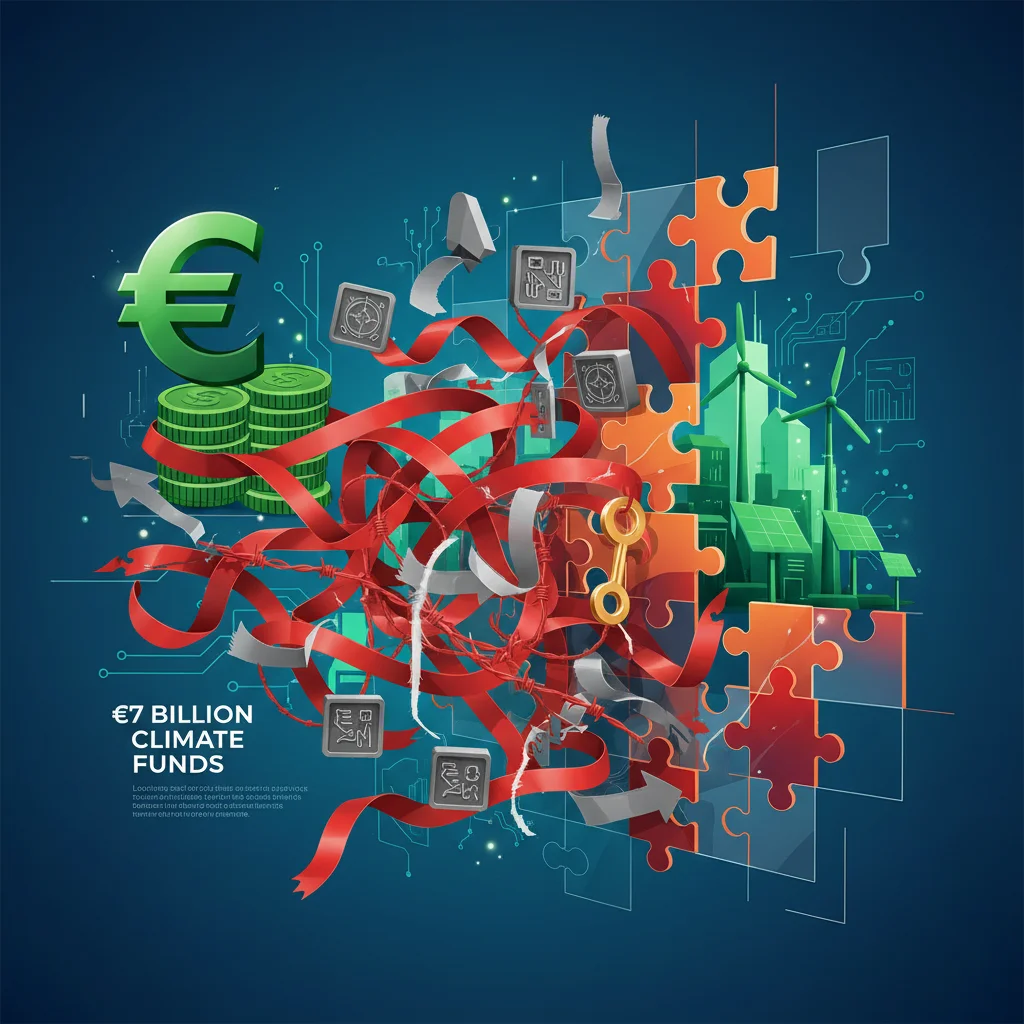
In the global race to build a sustainable future, capital is the fuel. Recognizing this, the European Union has positioned itself as a leader, earmarking billions of euros to spur innovation in clean technology. The bloc’s flagship program, the Innovation Fund, stands as a testament to this ambition, having awarded a staggering €7.1 billion to pioneering green projects. Yet, a colossal paradox is unfolding: while the money has been promised, it remains largely inaccessible. A recent investigation reveals a shocking reality—a mere 5% of these funds have actually been paid out, leaving a trail of frustrated innovators and stalled projects in its wake.
This isn’t just a minor delay; it’s a systemic failure that threatens to derail Europe’s green transition. Companies, from nimble startups to industrial giants, are finding themselves drowning in a sea of bureaucracy, reportedly spending an average of 3,000 hours on paperwork just to access the capital they’ve been awarded. This administrative quagmire has profound implications for the European economy, the future of green finance, and the continent’s ability to compete on the global stage. As capital sits idle, the clock on climate change keeps ticking.
The Grand Vision vs. The Harsh Reality
The EU Innovation Fund was designed to be a game-changer. Funded by revenues from the EU’s Emissions Trading System (ETS), its purpose is to de-risk and accelerate breakthrough technologies in areas like green hydrogen, carbon capture, and renewable energy. It represents a crucial pillar of the European Green Deal, a policy package intended to make Europe the first climate-neutral continent.
The vision is clear: use public funds to leverage private investing, creating a vibrant ecosystem for clean tech that generates jobs, drives economic growth, and secures a sustainable future. However, the execution has fallen dramatically short of the ambition. The gap between awarded funds and disbursed capital highlights a critical bottleneck.
To put the numbers into perspective, let’s look at the breakdown of this financial logjam.
| Metric | Amount |
|---|---|
| Total Capital Awarded to Projects | €7.1 Billion |
| Total Capital Actually Disbursed | ~€355 Million |
| Percentage of Awarded Funds Paid Out | Approximately 5% (source) |
The data paints a stark picture. For every €100 promised to a groundbreaking green project, only €5 has made it into the company’s bank account. The primary culprit is an overwhelmingly complex and time-consuming administrative process. Companies report that navigating the grant agreement procedures, which occur *after* a project has already been selected and approved, can take over a year. An estimated 3,000 hours of work per company—the equivalent of one and a half full-time employees working for an entire year—is spent on compliance, reporting, and legal hurdles. For smaller innovators, this burden is simply insurmountable.
Beyond the Headlines: The Economic Shockwaves of West Bank Instability for Investors
The Ripple Effect on Finance, Investing, and the Economy
This bureaucratic paralysis is more than an inconvenience; it’s a major economic headwind with far-reaching consequences for investors, banks, and the broader market.
1. Crippling Investment Uncertainty
For finance professionals and investors, predictability is paramount. The massive delays in the EU fund create a climate of extreme uncertainty. Private investors and venture capital firms, which often co-invest alongside public funds, are hesitant to commit capital when the foundational grant money is stuck in limbo. This stalls project timelines, inflates costs, and can cause a project’s entire financing structure to collapse. Consequently, the perceived risk of investing in European clean tech rises, potentially depressing valuations on the stock market for publicly traded companies in this sector.
2. A Competitive Disadvantage on the World Stage
While Europe is entangled in red tape, its primary economic competitor, the United States, is moving with aggressive speed. The U.S. Inflation Reduction Act (IRA) offers straightforward tax credits that are far easier and faster to access. This stark contrast is not just a matter of administrative preference; it’s actively redirecting global capital flows. Companies are now reconsidering plans to build factories in Europe, opting instead for the more favorable and predictable investment climate in the U.S. This represents a monumental threat to Europe’s industrial base and its leadership in the green revolution.
Here’s a simplified comparison of the two dominant approaches:
| Feature | EU Innovation Fund | US Inflation Reduction Act (IRA) |
|---|---|---|
| Mechanism | Competitive grants awarded based on project merit | Largely non-competitive tax credits for production/investment |
| Application Process | Complex, multi-stage, lengthy due diligence | Simpler, rules-based, integrated into tax filings |
| Speed of Payout | Extremely slow (months to years after award) | Relatively fast (claimed during tax cycles) |
| Key Challenge | Bureaucratic bottlenecks and disbursement delays | Potential for higher costs and less targeted spending |
3. Stifling Innovation at the Source
The current system disproportionately harms the small and medium-sized enterprises (SMEs) that are often the true engines of innovation. These companies lack the large legal and administrative teams of industrial giants to navigate the paperwork. By creating a system that only the largest and most well-resourced players can endure, the EU risks filtering out disruptive technologies and reinforcing the market position of incumbents. This is the antithesis of a dynamic, innovative economy.
Analysis Paralysis: Why the UK Budget's Shadow Looms Large Over Business Investment
This is precisely where modern financial technology could offer a path forward. Imagine a system where grant applications and milestone verifications are managed on a transparent, distributed ledger using blockchain technology. This could automate compliance checks, streamline payments, and provide real-time visibility to all stakeholders, drastically cutting down the administrative burden. Europe is at risk of fighting a 21st-century problem with 20th-century bureaucracy. The solution may lie not just in cutting red tape, but in fundamentally re-engineering the financial infrastructure that underpins these vital programs.
Forging a Path Forward: Can the System Be Fixed?
The diagnosis is clear, but the cure is complex. Acknowledging the problem is the first step, and pressure is mounting on Brussels to reform the system. Several potential solutions are being discussed:
- Simplification and Standardization: Creating a more streamlined, standardized application and grant agreement process is the most obvious fix. This could involve clearer guidelines, digital submission platforms, and a reduction in redundant paperwork.
- Tiered Compliance: A one-size-fits-all approach doesn’t work. Introducing tiered administrative requirements—with lighter burdens for smaller projects and SMEs—could unlock innovation from the ground up.
- Adopting “Auctioning” Models: For some technologies, moving towards auction-based systems (like Contracts for Difference) can provide price certainty and faster capital deployment compared to complex project-by-project evaluations.
- Empowering National Agencies: Decentralizing some of the administrative load to national-level agencies, which may be more attuned to local business realities, could help expedite the process, though this would require careful coordination to maintain a level playing field across the EU.
The European Investment Bank (EIB), which manages the fund, has a critical role to play. It must transition from a conservative lender to a more agile facilitator of innovation. This requires a cultural shift towards accepting higher levels of risk and prioritizing speed of execution.
The New Economic Battlefield: How Hybrid Warfare Is Targeting Your Portfolio
Ultimately, the EU stands at a crossroads. It has successfully generated the capital and identified the innovative projects needed to power its green transition. Yet, it is being held back by its own internal processes. The challenge is no longer one of ambition or economics, but of implementation. Untangling this Gordian knot of red tape is now one of the most pressing tasks for European policymakers. If they fail, the €7.1 billion promise will remain just that—a promise, while the opportunity for global climate leadership, and the immense economic benefits that come with it, slips away.

Related Posts

The Supreme Court Takes Aim at the Fed: Why This Obscure Case Could Reshape Your Financial Future

The Great Rupture: Mark Carney’s Blueprint for Navigating a Fractured Global Economy